Employee Stock Option Plans (ESOP)_ Implementation Guide - featured image

Employee Stock Option Plans (ESOP): Implementation Guide

Employee Stock Option Plans provide employees with contractual rights to acquire company shares later. Therefore, ESOP implementation requires coordinated corporate, securities, employment, accounting, and taxation decisions. In India, the legal route differs between listed and unlisted companies. Unlisted companies primarily follow the Companies Act, 2013 and applicable rules. Listed companies additionally follow SEBI’s Share Based

Employee Stock Option Plans (ESOP): Implementation Guide Read More »

Foreign Direct Investment (FDI) in Indian Companies: Complete Guide - featured image

Foreign Direct Investment (FDI) in Indian Companies: Complete Guide

Introduction to Foreign Direct Investment in Indian Companies However, FDI involves more than transferring money into an Indian company. Investors must examine sectoral caps, entry routes, pricing rules, ownership restrictions, and reporting duties. Therefore, every proposed investment requires coordinated corporate and foreign exchange compliance. India regulates FDI primarily through FEMA, DPIIT policy, RBI regulations, and

Foreign Direct Investment (FDI) in Indian Companies: Complete Guide Read More »

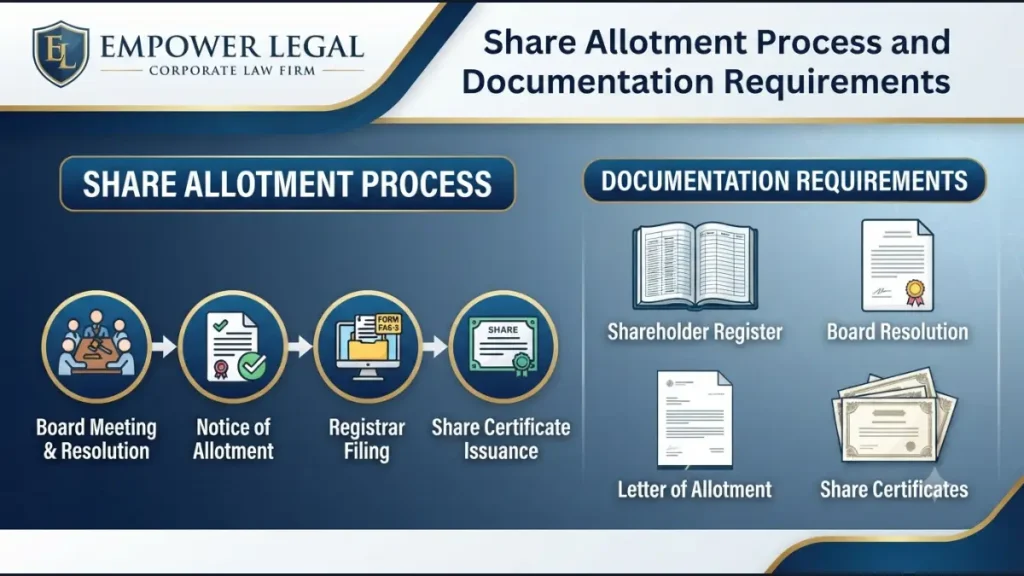
Share Allotment Process and Documentation Requirements in India - featured image

Share Allotment Process and Documentation Requirements in India

Introduction: Share Allotment as a Critical Corporate Compliance Process Share allotment creates legal ownership rights in a company’s issued share capital. Therefore, every allotment requires careful statutory planning, documentation, approval, and filing. Indian companies primarily follow the Companies Act, 2013 and applicable rules for allotment procedures. Listed companies must additionally follow applicable SEBI regulations and

Share Allotment Process and Documentation Requirements in India Read More »

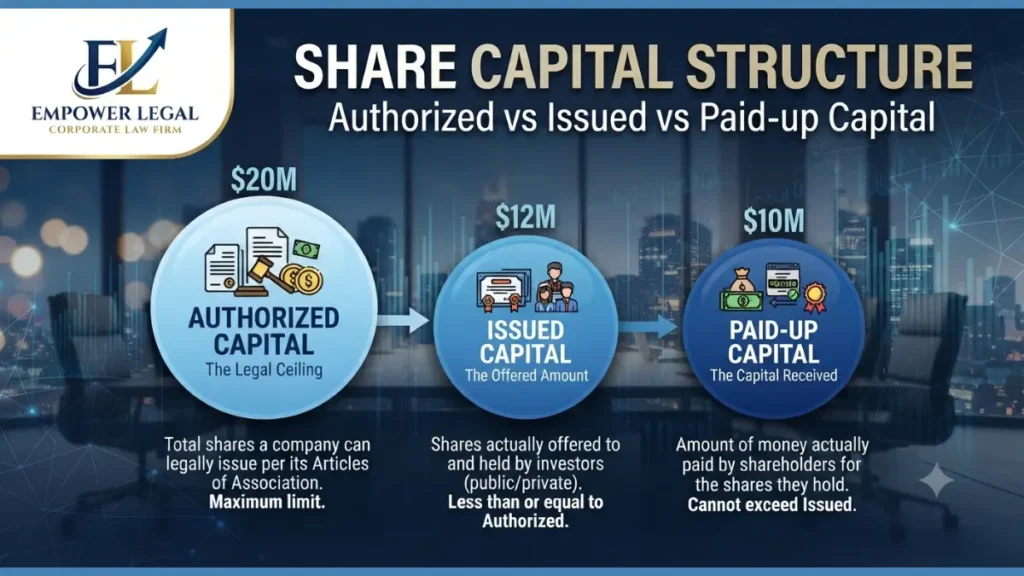
Share Capital Structure_ Authorized vs Paid-up vs Issued Capital - featured image

Share Capital Structure: Authorized vs Paid-up vs Issued Capital

Understanding Share Capital Structure for Indian Companies Introduction to Share Capital Structure Share capital forms the financial foundation of a company limited by shares. Therefore, directors must understand each capital category before issuing securities. Authorized capital, issued capital, subscribed capital, and paid-up capital serve different legal purposes. However, businesses often confuse these terms during incorporation,

Share Capital Structure: Authorized vs Paid-up vs Issued Capital Read More »

Maintenance of Statutory Registers and Records

Maintenance of Statutory Registers and Records

Introduction: Building Reliable Corporate Records Statutory registers and corporate records form the foundation of transparent company administration in India. Proper records support governance, audits, inspections, shareholder rights, and regulatory compliance. The Companies Act, 2013 requires companies to maintain specified registers, returns, minutes, and supporting documents. Section 94 addresses the place and inspection of statutory registers

Maintenance of Statutory Registers and Records Read More »

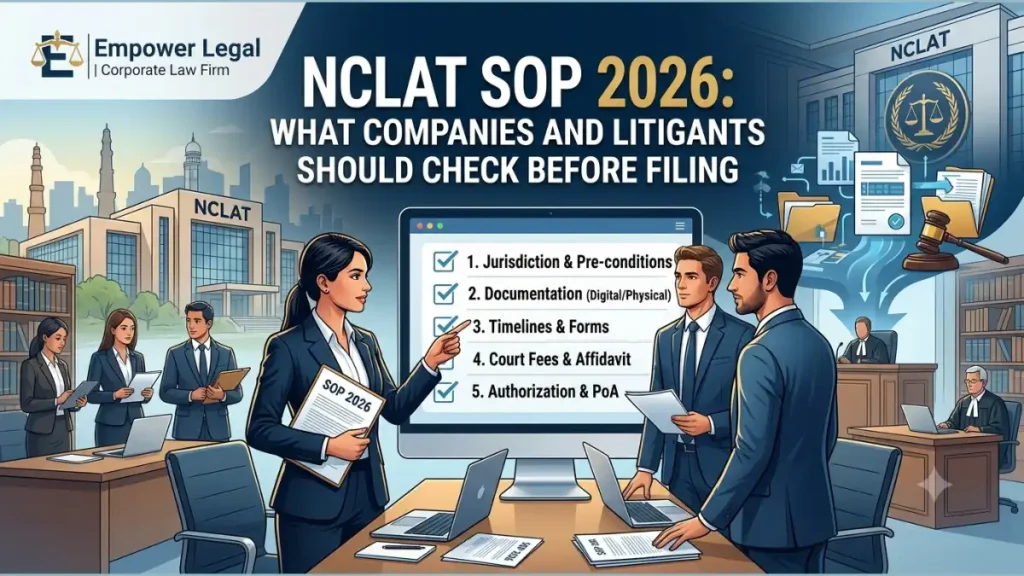
NCLAT SOP 2026: What Companies and Litigants Should Check Before Filing

NCLAT SOP 2026: What Companies and Litigants Should Check Before Filing

NCLAT published a new Standard Operating Procedure dated 10 September 2026 for submission and processing of applications. Learn what companies, directors, creditors and counsel should check before approaching NCLAT and how the IBC appeal framework fits into the process.

NCLAT SOP 2026: What Companies and Litigants Should Check Before Filing Read More »

Director KYC and Annual Confirmations: DIR-3 KYC and INC-20A

Director KYC and Annual Confirmations: DIR-3 KYC and INC-20A

Director KYC and Annual Confirmations – Director KYC is a statutory compliance requirement for individuals holding a Director Identification Number (DIN). The Ministry of Corporate Affairs uses DIR-3 KYC to maintain updated director information. Moreover, Rule 12A governs this annual KYC requirement under the Companies Act framework. Directors must verify their personal details, contact information,

Director KYC and Annual Confirmations: DIR-3 KYC and INC-20A Read More »