
Corporate governance and compliance have emerged as critical pillars for sustainable business operations in India. Moreover, the regulatory landscape has evolved significantly with the introduction of new legislations. Consequently, businesses must navigate complex legal frameworks to ensure adherence. Furthermore, effective governance structures protect stakeholder interests while promoting transparency. The Companies Act, 2013, along with SEBI regulations, forms the backbone of corporate compliance. Therefore, understanding these frameworks is essential for corporate entities. Additionally, non-compliance can result in severe penalties and reputational damage. In fact, recent amendments have strengthened enforcement mechanisms considerably. Subsequently, corporate boards must prioritize governance practices proactively. Meanwhile, regulatory bodies continue monitoring compliance through various oversight mechanisms.
Understanding Corporate Governance in the Indian Context
Regulatory Framework Governing Corporate Entities
The regulatory architecture governing corporate governance comprises multiple statutes and guidelines. Primarily, the Companies Act, 2013, establishes foundational governance requirements for all companies. Additionally, SEBI (Listing Obligations and Disclosure Requirements) Regulations, 2015, apply to listed entities. Furthermore, the Indian Contract Act, 1872, governs contractual obligations between stakeholders. Meanwhile, sector-specific regulations impose additional compliance burdens on certain industries. The Reserve Bank of India prescribes governance norms for financial institutions. Moreover, the Competition Act, 2002, ensures fair business practices and prevents monopolistic tendencies. Therefore, companies must maintain comprehensive compliance calendars tracking multiple regulatory obligations. In addition, the Bhartiya Nyaya Sanhita (BNS), 2023, has introduced provisions relating to corporate offences. Consequently, legal teams must stay updated on legislative changes continuously. Furthermore, international standards like OECD principles influence Indian corporate governance practices significantly.
Key Legislative Provisions Under Companies Act, 2013
The Companies Act, 2013, mandates specific governance structures for different company categories. Particularly, Section 149 prescribes board composition requirements including independent directors. Additionally, Section 177 requires listed companies to constitute an Audit Committee. Furthermore, Section 178 mandates Nomination and Remuneration Committees for certain companies. Meanwhile, Section 134 imposes detailed annual reporting obligations on company boards. Subsequently, Section 143 outlines auditor responsibilities and reporting requirements comprehensively. Moreover, Section 166 specifies fiduciary duties owed by directors to companies. Therefore, directors must exercise care, skill, and diligence while performing duties. In fact, Section 149(12) disqualifies individuals with specific convictions from directorship positions. Consequently, companies must conduct thorough background checks before appointing directors. Furthermore, Section 184 requires directors to disclose interests in contracts and arrangements.
- Section 149: Board composition and independent director requirements
- Section 177: Mandatory Audit Committee for prescribed companies
- Section 178: Nomination and Remuneration Committee provisions
- Section 134: Board Report and corporate governance disclosures
- Section 166: Duties of directors and fiduciary obligations
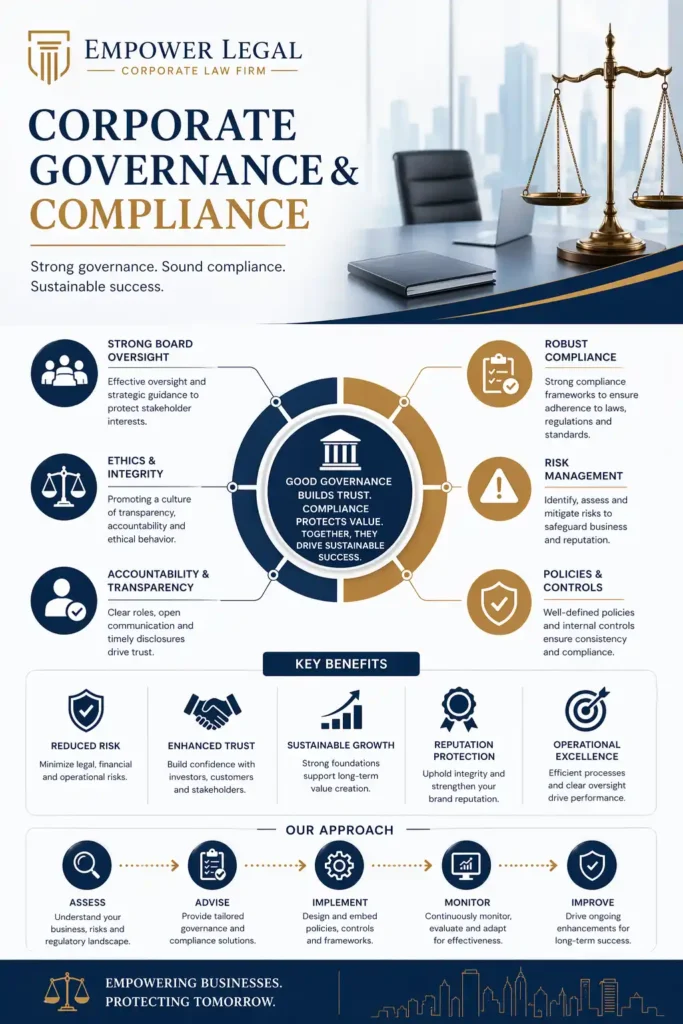
SEBI Regulations and Listing Obligations
SEBI regulations impose stringent governance requirements on listed companies to protect investor interests. Notably, Regulation 17 prescribes detailed board composition and meeting frequency requirements. Additionally, Regulation 18 mandates Audit Committee constitution with specific member qualifications. Furthermore, Regulation 19 requires Nomination and Remuneration Committees with defined terms of reference. Meanwhile, Regulation 20 prescribes Stakeholders Relationship Committee for addressing shareholder grievances. Subsequently, Regulation 24 imposes governance obligations on material subsidiaries of listed companies. Moreover, Regulation 26 requires detailed disclosure of related party transactions periodically. Therefore, listed companies maintain robust internal control systems for compliance monitoring. In addition, Regulation 30 mandates timely disclosure of material events affecting company operations. Consequently, companies must establish effective communication channels with stock exchanges. Furthermore, Regulation 33 prescribes quarterly and annual financial results disclosure timelines strictly.
Board Structure and Composition Requirements
Board composition significantly impacts corporate governance effectiveness and strategic decision-making capabilities. Specifically, listed companies must have at least one-third independent directors on boards. Additionally, if the chairman is an executive director, independent directors must constitute half. Furthermore, independent directors bring objectivity and diverse perspectives to board deliberations. Meanwhile, women directors must constitute at least one board position mandatorily. Subsequently, companies must disclose director qualifications, expertise, and other directorships in annual reports. Moreover, independent directors cannot serve beyond two consecutive terms of five years each. Therefore, board refreshment ensures new ideas and prevents entrenchment of existing directors. In fact, companies must evaluate board performance annually through structured assessment processes. Consequently, underperforming directors may be replaced to enhance overall board effectiveness. Furthermore, directors must attend minimum board and committee meetings as prescribed regulations.
Committee Structures and Their Functions
Board committees play crucial roles in ensuring effective governance and specialized oversight mechanisms. Primarily, the Audit Committee oversees financial reporting, internal controls, and auditor independence. Additionally, the committee reviews related party transactions and recommends board approval when required. Furthermore, the Nomination and Remuneration Committee determines director appointment criteria and compensation structures. Meanwhile, the Stakeholders Relationship Committee addresses shareholder grievances and monitors share transfer processes. Subsequently, the Risk Management Committee identifies, evaluates, and mitigates enterprise-wide risks systematically. Moreover, the Corporate Social Responsibility Committee ensures compliance with CSR spending obligations. Therefore, committees must comprise qualified members with relevant expertise in respective domains. In addition, committee charters should clearly define roles, responsibilities, and reporting mechanisms. Consequently, regular committee meetings with detailed minutes ensure accountability and transparency. Furthermore, committee recommendations require board approval before implementation in most governance matters.
| Committee | Minimum Members | Independent Director Requirement | Primary Function |
|---|---|---|---|
| Audit Committee | 3 | Two-thirds | Financial oversight |
| Nomination Committee | 3 | Chairperson must be independent | Director appointments |
| Stakeholder Committee | 3 | Chairperson must be independent | Shareholder grievances |
| Risk Management | As prescribed | Majority independent | Risk identification |
| CSR Committee | 3 | At least one | CSR compliance |
Corporate Compliance Obligations and Reporting Requirements
Statutory Filing Requirements and Timelines
Companies must adhere to numerous statutory filing deadlines with various regulatory authorities. Specifically, annual financial statements require filing within thirty days from Annual General Meeting. Additionally, the Ministry of Corporate Affairs mandates various e-forms for different corporate events. Furthermore, Form MGT-7 (Annual Return) must be filed within sixty days from AGM. Meanwhile, Form AOC-4 (Financial Statements) requires submission to Registrar of Companies promptly. Subsequently, listed companies must file quarterly financial results within forty-five days from quarter-end. Moreover, SEBI mandates shareholding pattern disclosure within seven days of quarter conclusion. Therefore, companies maintain compliance calendars tracking multiple regulatory filing obligations systematically. In addition, delayed filings attract monetary penalties calculated on a per-day basis. Consequently, compliance officers must implement robust tracking mechanisms preventing inadvertent delays. Furthermore, the Bhartiya Nagarik Suraksha Sanhita (BNSS), 2023, prescribes procedural requirements for certain filings.
Annual Compliance Calendar for Corporate Entities
An annual compliance calendar helps companies systematically manage their regulatory obligations throughout the year. Notably, companies must conduct board meetings at least four times annually with maximum gaps. Additionally, Annual General Meetings require holding within six months from financial year-end. Furthermore, independent director meetings must occur at least once annually without management presence. Meanwhile, companies must file income tax returns within prescribed timelines under Income Tax Act. Subsequently, GST returns require monthly filing with Input Tax Credit reconciliation statements. Moreover, provident fund and employee state insurance contributions need timely remittance monthly. Therefore, companies deploy compliance management software automating reminders and tracking mechanisms. In fact, internal audits should verify compliance status quarterly identifying gaps proactively. Consequently, management must address identified deficiencies before statutory deadlines expire. Furthermore, the Bhartiya Sakshya Adhiniyam (BSA), 2023, governs evidence requirements in compliance proceedings.
- Board meetings: Four times annually with ninety-day maximum gap between meetings
- Annual General Meeting: Within six months from financial year ending date
- Form MGT-7 filing: Within sixty days from AGM date completion
- Form AOC-4 filing: Within thirty days from AGM date conclusion
- Income tax return: Before September 30 for companies requiring audit
Disclosure Requirements and Transparency Obligations
Transparency forms the cornerstone of effective corporate governance and stakeholder confidence building. Specifically, companies must disclose related party transactions exceeding materiality thresholds in financial statements. Additionally, director remuneration details require comprehensive disclosure in board reports annually. Furthermore, shareholding patterns of promoters and public shareholders need quarterly disclosure. Meanwhile, material events significantly affecting company operations warrant immediate stock exchange notification. Subsequently, companies must publish quarterly financial results in newspapers and on company websites. Moreover, Business Responsibility and Sustainability Reports require detailed ESG metric disclosures. Therefore, investor presentations must not contain unpublished price-sensitive information selectively. In addition, whistleblower complaints and their resolution status need reporting in audit reports. Consequently, companies establish vigil mechanisms enabling stakeholders to report unethical practices confidentially. Furthermore, insider trading regulations prohibit trading on unpublished price-sensitive information strictly.
Internal Control Systems and Risk Management
Robust internal control systems protect company assets and ensure reliable financial reporting processes. Primarily, companies must establish internal financial controls as per Section 134(5) requirements. Additionally, management must assess control effectiveness and report deficiencies to audit committees. Furthermore, internal audit functions should independently evaluate control adequacy across business processes. Meanwhile, risk management frameworks identify, assess, and mitigate risks threatening business objectives. Subsequently, enterprise risk management policies should cover strategic, operational, financial, and compliance risks. Moreover, cybersecurity controls protect sensitive data from unauthorized access and cyber threats. Therefore, companies conduct regular control testing identifying weaknesses before external audits. In fact, statutory auditors must report on internal financial control adequacy annually. Consequently, management addresses auditor observations implementing corrective measures promptly. Furthermore, fraud prevention mechanisms including segregation of duties reduce misappropriation risks significantly.
Legal Issues and Remedial Mechanisms in Corporate Governance
Common Governance Violations and Penalties
Director Duties Breach and Personal Liability
Directors face significant personal liability when breaching fiduciary duties owed to companies. Specifically, Section 166 violations attract penalties up to five lakh rupees individually. Additionally, directors may face disqualification from holding directorships for five years. Furthermore, gross negligence causing company losses may trigger civil liability claims. Meanwhile, fraudulent conduct attracts criminal prosecution under BNS provisions with imprisonment terms. Subsequently, independent directors can be held liable for inadequate oversight in certain situations. Moreover, insider trading violations result in imprisonment up to ten years and penalties. Therefore, directors must maintain comprehensive directors and officers liability insurance coverage. In fact, derivative actions enable shareholders to sue directors for company losses. Consequently, directors should document board deliberations thoroughly demonstrating due diligence. Furthermore, indemnification provisions in Articles of Association protect directors from certain liabilities.
Penalties Under Companies Act and BNS Provisions
The Companies Act, 2013, prescribes graduated penalties based on violation severity and company size. Notably, default in financial statement filing attracts penalties starting from one lakh rupees. Additionally, failure to constitute mandatory committees results in penalties up to five lakh rupees. Furthermore, non-compliance with related party transaction provisions attracts twenty-five lakh rupee penalties. Meanwhile, fraud offences under Section 447 carry imprisonment up to ten years. Subsequently, the BNS, 2023, replaced the Indian Penal Code introducing revised criminal provisions. Moreover, Section 316 BNS addresses criminal breach of trust by company officials. Therefore, compliance officers must understand both civil and criminal liability provisions comprehensively. In addition, compounding of offences is available for certain violations upon payment. Consequently, companies may avoid criminal prosecution by compounding eligible offences before adjudication. Furthermore, repeated violations attract enhanced penalties discouraging persistent non-compliance.
| Violation Type | Applicable Section | Maximum Penalty | Imprisonment |
|---|---|---|---|
| Director duty breach | Section 166 | Rs. 5,00,000 | Not applicable |
| Fraud offences | Section 447 | Rs. 50,00,000 | Up to 10 years |
| Filing defaults | Section 92/137 | Rs. 1,00,000 | Not applicable |
| Insider trading | SEBI Act | Rs. 25 crores | Up to 10 years |
| Related party violations | Section 188 | Rs. 25,00,000 | Not applicable |
SEBI Enforcement Actions and Securities Law Violations
SEBI exercises extensive enforcement powers addressing securities market violations and protecting investor interests. Specifically, SEBI can conduct investigations into suspected insider trading or market manipulation cases. Additionally, the regulator issues show cause notices requiring respondents to explain alleged violations. Furthermore, adjudication proceedings determine liability and impose monetary penalties on violators. Meanwhile, consent mechanisms allow settling proceedings by paying settlement amounts without admitting guilt. Subsequently, SEBI can debar individuals from securities markets preventing future violations. Moreover, disgorgement orders require surrendering wrongful gains derived from violations. Therefore, companies must establish robust insider trading prevention policies and conduct regular training. In fact, SEBI maintains an insider trading database tracking designated persons’ trading activities. Consequently, companies must report insider trades within two days of transaction occurrence. Furthermore, Securities Appellate Tribunal hears appeals against SEBI orders within prescribed timelines.
Shareholder Rights and Minority Protection Mechanisms
Shareholder rights protection ensures equitable treatment and prevents oppression by majority stakeholders. Primarily, Section 241 enables minority shareholders to file oppression and mismanagement petitions. Additionally, National Company Law Tribunal (NCLT) adjudicates such disputes providing appropriate relief. Furthermore, shareholders holding ten percent shares can request calling Extraordinary General Meetings. Meanwhile, derivative actions under Section 245 allow shareholders to sue directors on behalf. Subsequently, class action suits enable shareholders to collectively seek damages for company losses. Moreover, shareholders possess inspection rights examining company books and records upon request. Therefore, companies must maintain accurate statutory registers accessible to shareholders as prescribed. In addition, proxy voting mechanisms enable shareholders to vote without physical meeting attendance. Consequently, e-voting platforms facilitate broader shareholder participation in governance decisions. Furthermore, shareholders can question auditors during AGMs regarding financial statement irregularities.
NCLT Jurisdiction and Remedial Powers
The National Company Law Tribunal exercises extensive jurisdiction over corporate disputes and governance matters. Specifically, NCLT adjudicates oppression and mismanagement petitions filed by aggrieved shareholders. Additionally, the tribunal approves schemes of merger, amalgamation, and reconstruction between companies. Furthermore, NCLT oversees insolvency and bankruptcy proceedings under the Insolvency and Bankruptcy Code. Meanwhile, the tribunal can remove directors guilty of fraud or persistent breaches. Subsequently, NCLT appoints administrators managing company affairs when necessary for stakeholder protection. Moreover, the tribunal can order share transfer rectifying unlawful refusals or delays. Therefore, NCLT benches across India ensure accessible justice for corporate disputes nationwide. In fact, the National Company Law Appellate Tribunal (NCLAT) hears appeals against NCLT orders. Consequently, NCLAT decisions can be further appealed to Supreme Court on substantial legal questions. Furthermore, NCLT follows procedures prescribed under BNSS, 2023, for certain proceedings.
- Oppression and mismanagement petitions under Sections 241-244 of Companies Act
- Scheme approvals including mergers, demergers, and amalgamations requiring tribunal sanction
- Insolvency proceedings under Insolvency and Bankruptcy Code, 2016 provisions
- Director removal for fraud, breach of duties, or persistent violations
- Class action suits seeking damages for company losses caused by directors
Jurisdiction and Competent Forums
National Company Law Tribunal Structure
NCLT comprises multiple benches strategically located across India ensuring regional accessibility for litigants. Specifically, the Principal Bench operates from New Delhi handling matters of national importance. Additionally, regional benches function in Ahmedabad, Allahabad, Bengaluru, Chandigarh, Chennai, Guwahati, and other cities. Furthermore, each bench comprises judicial and technical members bringing diverse expertise to adjudication. Meanwhile, territorial jurisdiction depends on company’s registered office location for most proceedings. Subsequently, companies must file applications before the appropriate bench having territorial jurisdiction. Moreover, NCLT benches in Chennai hear matters from Tamil Nadu and Puducherry regions. Therefore, companies registered in Chennai must approach the Chennai NCLT Bench located at:
National Company Law Tribunal, Chennai Bench
First Floor, Kendriya Sadan
No. 2, Haddows Road, Nungambakkam
Chennai – 600034, Tamil Nadu
Phone: 044-28278222
SEBI and Stock Exchange Dispute Resolution
SEBI oversees securities market disputes through adjudication and arbitration mechanisms effectively. Primarily, SEBI adjudicating officers conduct proceedings for violations of securities law provisions. Additionally, Securities Appellate Tribunal (SAT) hears appeals against SEBI orders and directions. Furthermore, stock exchanges operate arbitration mechanisms resolving disputes between trading members and investors. Meanwhile, investor grievance redressal mechanisms operate at stock exchange and depository levels. Subsequently, SEBI’s SCORES platform enables online filing and tracking of investor complaints. Moreover, the Investor Protection Fund compensates eligible investors for certain market intermediary defaults. Therefore, investors should first approach stock exchanges before escalating complaints to SEBI. In addition, SAT provides expeditious justice with proceedings concluding within statutory timelines. Consequently, SAT decisions can be appealed to Supreme Court on substantial legal questions only. Furthermore, alternative dispute resolution mechanisms including mediation offer faster resolution options.
High Court and Supreme Court Jurisdiction
High Courts exercise supervisory jurisdiction over tribunals and lower courts in corporate matters. Specifically, writ petitions challenge administrative actions violating fundamental or statutory rights. Additionally, High Courts hear appeals from NCLT decisions on substantial questions of law. Furthermore, company petition proceedings address winding up and dissolution of companies. Meanwhile, High Courts can issue writs of mandamus directing authorities to perform statutory duties. Subsequently, the Madras High Court exercises jurisdiction over companies registered in Tamil Nadu. Moreover, the High Court’s Company Law Board exercised certain powers before NCLT establishment. Therefore, the Madras High Court remains accessible for constitutional and extraordinary relief matters. In fact, the Supreme Court hears appeals from NCLAT and High Courts finally. Consequently, the Supreme Court’s interpretations on corporate governance bind all courts and tribunals. Furthermore, the Supreme Court exercises original jurisdiction in disputes between states and companies.
Madras High Court
High Court Buildings
Parry’s Corner
Chennai – 600001, Tamil Nadu
Phone: 044-25340801
Regulatory Authorities and Departments
Multiple regulatory authorities oversee different aspects of corporate governance and compliance systematically. Primarily, the Ministry of Corporate Affairs administers the Companies Act through Regional Directors. Additionally, the Registrar of Companies maintains company records and processes statutory filings. Furthermore, the Serious Fraud Investigation Office investigates complex corporate frauds and offences. Meanwhile, the Competition Commission of India monitors mergers and prevents anti-competitive practices. Subsequently, sectoral regulators like RBI, IRDA, and TRAI govern specific industries comprehensively. Moreover, the Central Economic Intelligence Bureau coordinates multi-agency investigations into economic offences. Therefore, companies must engage with multiple authorities maintaining separate compliance protocols. In addition, the Ministry of Corporate Affairs regional office for Tamil Nadu operates from Chennai. Consequently, companies should maintain regular communication with regulatory authorities preventing compliance gaps. Furthermore, authorities conduct inspections and audits verifying compliance with applicable legal provisions.
Registrar of Companies, Tamil Nadu
2nd Floor, Shastri Bhavan Annexe
No. 26, Haddows Road, Nungambakkam
Chennai – 600006, Tamil Nadu
Phone: 044-28272580
Legal Support and Professional Services
Types of Legal Support for Corporate Compliance
Corporate Legal Advisory Services
Specialized corporate legal advisory services help companies navigate complex regulatory landscapes effectively. Specifically, law firms provide board advisory services guiding directors on governance best practices. Additionally, legal advisors conduct compliance audits identifying gaps and recommending remedial measures. Furthermore, transaction advisory services assist with mergers, acquisitions, and corporate restructuring matters. Meanwhile, regulatory compliance services ensure adherence to sector-specific regulations and guidelines. Subsequently, secretarial services manage statutory filings, board meetings, and shareholder communications. Moreover, legal advisors draft and review commercial contracts protecting client interests comprehensively. Therefore, companies should engage experienced corporate law practitioners for complex governance matters. In fact, preventive legal advisory reduces litigation risks and compliance violations significantly. Consequently, regular legal health check-ups identify emerging issues before they escalate. Furthermore, law firms provide training programs educating directors and employees on compliance obligations.
Company Secretary Services and Compliance Management
Company secretaries play pivotal roles ensuring corporate compliance and effective governance implementation. Specifically, practicing company secretaries certify compliance with applicable laws in annual reports. Additionally, they conduct secretarial audits examining compliance status across various legal provisions. Furthermore, company secretaries manage board meetings preparing agendas, minutes, and resolutions. Meanwhile, they coordinate with regulatory authorities for various filings and approvals. Subsequently, company secretaries advise boards on governance practices and regulatory changes. Moreover, they ensure proper maintenance of statutory registers and company records. Therefore, companies appoint qualified company secretaries as compliance officers managing obligations. In addition, the Institute of Company Secretaries of India conducts professional development programs. Consequently, company secretaries must maintain continuing professional education meeting regulatory requirements. Furthermore, practicing company secretaries must obtain Certificate of Practice from the Institute.
Litigation and Dispute Resolution Support
Corporate litigation support encompasses representation before various judicial and quasi-judicial forums. Specifically, experienced advocates represent companies in NCLT proceedings relating to governance disputes. Additionally, lawyers handle shareholder disputes, oppression petitions, and derivative actions effectively. Furthermore, litigation support includes drafting comprehensive pleadings, applications, and legal submissions. Meanwhile, advocates conduct legal research identifying relevant precedents supporting client positions. Subsequently, alternative dispute resolution services including mediation and arbitration offer faster resolution. Moreover, white-collar crime defense requires specialized expertise in corporate criminal proceedings. Therefore, companies should maintain relationships with litigation counsel for prompt response. In addition, experienced litigators negotiate settlements protecting client interests while avoiding prolonged disputes. Consequently, early legal intervention often prevents escalation into full-blown litigation. Furthermore, advocates must possess proper enrollment and practice certificates from Bar Councils.
Remedies Available for Governance Violations
Various legal remedies address corporate governance violations protecting stakeholder interests effectively. Primarily, shareholders can seek NCLT intervention for oppression and mismanagement under Sections 241-244. Additionally, derivative actions enable shareholders to sue directors recovering damages for company losses. Furthermore, class action suits allow collective shareholder action against directors or auditors. Meanwhile, winding up petitions provide extreme remedy when company affairs warrant dissolution. Subsequently, shareholders can requisition Extraordinary General Meetings removing errant directors through special resolutions. Moreover, statutory auditors must report frauds to Central Government triggering investigations. Therefore, whistleblower mechanisms enable stakeholders to report violations anonymously without retaliation fears. In addition, regulatory authorities can prosecute violations imposing penalties and disqualifications. Consequently, compounding of offences offers settlement options for certain violations before adjudication. Furthermore, injunctions prevent directors from taking actions detrimental to company interests.
- NCLT petitions for oppression, mismanagement, and director removal from company boards
- Derivative actions seeking damages from directors for losses caused by breaches
- Class action suits collectively pursuing claims against directors or auditors
- Winding up proceedings when continuation prejudices stakeholder interests substantially
- Regulatory enforcement including penalties, disgorgement, and market debarment orders
Preventive Measures and Best Practices
Establishing Robust Compliance Framework
Proactive compliance frameworks prevent violations and promote ethical business conduct across organizations. Specifically, companies should develop comprehensive compliance manuals documenting all applicable legal obligations. Additionally, compliance calendars track filing deadlines, meeting requirements, and regulatory submissions. Furthermore, internal audit functions should independently verify compliance status identifying gaps proactively. Meanwhile, whistleblower policies encourage employees to report violations without fear of retaliation. Subsequently, compliance training programs educate employees on legal obligations and ethical standards. Moreover, compliance management software automates tracking, reminders, and documentation of compliance activities. Therefore, board oversight of compliance functions ensures senior management commitment to governance. In addition, compliance officers should report directly to Audit Committees ensuring independence. Consequently, periodic compliance audits by external professionals provide objective assessments. Furthermore, companies should establish escalation mechanisms addressing identified violations promptly.
Director Training and Continuous Education
Director education programs enhance board effectiveness and governance quality substantially over time. Specifically, induction programs familiarize new directors with company operations, strategies, and challenges. Additionally, independent directors must complete familiarization programs understanding industry dynamics and risks. Furthermore, continuing education programs update directors on regulatory changes and emerging governance practices. Meanwhile, specialized training on ESG topics helps boards address sustainability challenges effectively. Subsequently, financial literacy programs enhance directors’ abilities to oversee complex financial transactions. Moreover, cybersecurity training enables directors to understand and mitigate digital risks appropriately. Therefore, companies should allocate budgets supporting director professional development and training initiatives. In addition, industry associations and professional bodies conduct director certification programs regularly. Consequently, trained directors make informed decisions protecting stakeholder interests and company reputation. Furthermore, board evaluations should assess director knowledge gaps identifying targeted training needs.
Technology Solutions for Compliance Management
Technology platforms streamline compliance management reducing manual errors and improving efficiency significantly. Specifically, board management software digitizes board packs, approvals, and meeting documentation. Additionally, compliance management systems automate deadline tracking, task assignments, and completion monitoring. Furthermore, contract lifecycle management platforms track obligations, renewals, and compliance across contracts. Meanwhile, regulatory change management tools monitor legal developments alerting companies to relevant changes. Subsequently, e-signature platforms enable remote approvals maintaining audit trails for regulatory compliance. Moreover, data analytics tools identify compliance risks and trends from transactional data. Therefore, companies should invest in integrated compliance technology stacks enhancing governance capabilities. In addition, cloud-based solutions ensure secure access to compliance data from anywhere. Consequently, automation reduces compliance costs while improving accuracy and timeliness substantially. Furthermore, artificial intelligence tools predict compliance risks enabling proactive interventions before violations occur.
Engaging Professional Advisors
Professional advisors bring specialized expertise helping companies navigate complex governance and compliance challenges. Specifically, corporate lawyers advise on governance structures, compliance obligations, and regulatory matters. Additionally, company secretaries manage statutory compliance, board processes, and regulatory filings. Furthermore, chartered accountants ensure financial reporting accuracy and tax compliance comprehensively. Meanwhile, independent directors provide objective oversight and diverse perspectives to board deliberations. Subsequently, external auditors verify financial statements and assess internal control effectiveness. Moreover, forensic accountants investigate suspected frauds and financial irregularities when necessary. Therefore, companies should build relationships with qualified professionals across various disciplines. In addition, professional advisors should possess necessary qualifications, registrations, and experience in corporate matters. Consequently, regular advisor engagement prevents compliance gaps and identifies emerging governance issues. Furthermore, advisor selection should consider sector expertise, reputation, and conflict-of-interest considerations.
At Empower Legal: Corporate Law Firm, we provide comprehensive corporate governance and compliance advisory services. Our experienced team assists companies in establishing robust governance frameworks and navigating regulatory complexities. We offer specialized services including board advisory, compliance audits, secretarial services, and litigation support. Moreover, our deep expertise in Indian corporate laws ensures effective solutions tailored to client needs. Therefore, companies seeking expert legal guidance can contact us for personalized assistance.
Nearby Law Enforcement and Support Facilities
Companies experiencing governance violations or fraud may need to approach law enforcement authorities. Specifically, the Economic Offences Wing investigates corporate frauds and financial irregularities in Chennai. Additionally, local police stations handle criminal complaints relating to corporate offences under BNS. Furthermore, the Central Bureau of Investigation handles cases involving public sector undertakings and corruption. Meanwhile, the Serious Fraud Investigation Office investigates complex multi-jurisdictional corporate frauds. Therefore, companies should understand which authority has jurisdiction over specific violations. In addition, timely reporting to authorities preserves evidence and enables effective investigation.
Economic Offences Wing, Chennai
Old DGP Office Complex
Mylapore, Chennai – 600004
Phone: 044-24982500
Ambattur Police Station
Ambattur Industrial Estate
Chennai – 600058, Tamil Nadu
Phone: 044-26257211
Frequently Asked Questions on Corporate Governance & Compliance
Listed companies must have at least one-third independent directors on boards. If chairman is executive, independent directors must constitute half the board. Additionally, independent directors cannot serve beyond two consecutive five-year terms.
Violations of Section 188 attract penalties up to Rs. 25,00,000 on companies. Additionally, responsible officers face penalties up to Rs. 5,00,000 each. Furthermore, contracts entered without approval may be voidable at company’s option.
The National Company Law Tribunal, Chennai Bench, located at Kendriya Sadan, Haddows Road, has jurisdiction. Shareholders holding ten percent shares can file petitions. Additionally, appeals lie to National Company Law Appellate Tribunal, New Delhi.
Listed companies must constitute Audit Committee, Nomination and Remuneration Committee, and Stakeholders Relationship Committee. Additionally, top 1000 companies need Risk Management Committees. Furthermore, companies with CSR obligations require CSR Committees.
Minority shareholders can file oppression petitions before NCLT under Sections 241-244. Additionally, derivative actions enable suing directors for company losses. Furthermore, class action suits allow collective shareholder action against directors or auditors effectively.
Read More
- Directors Disqualification: How to find Your Shield in Corporate Law?
- Intellectual Property Appellate Board
- Company Law Compliance Services | Trusted Expert Solutions
- Enhance Business Stability with AOA Drafting Services
- Removal of Directors Disqualification: Expert Legal Services
- SEBI | Regulations
This article is for informational purposes only and does not constitute legal advice. Companies should consult qualified legal professionals for specific compliance guidance tailored to their circumstances. The legal landscape continues evolving, requiring ongoing monitoring of regulatory developments.