

In today’s fast-changing business world, companies continuously try to reduce risks, improve efficiency, and strengthen workplace safety. As a result, two practices—background verification & manpower outsourcing—have become essential for modern organizations. Although these processes seem straightforward, they involve several important legal responsibilities that employers must understand. At Empower Legal – Corporate Law Firm, we help businesses navigate these areas clearly and confidently, ensuring compliance and protecting long-term interests.
Background Verification & Manpower Outsourcing: Legal Aspects Explained – Empower Legal
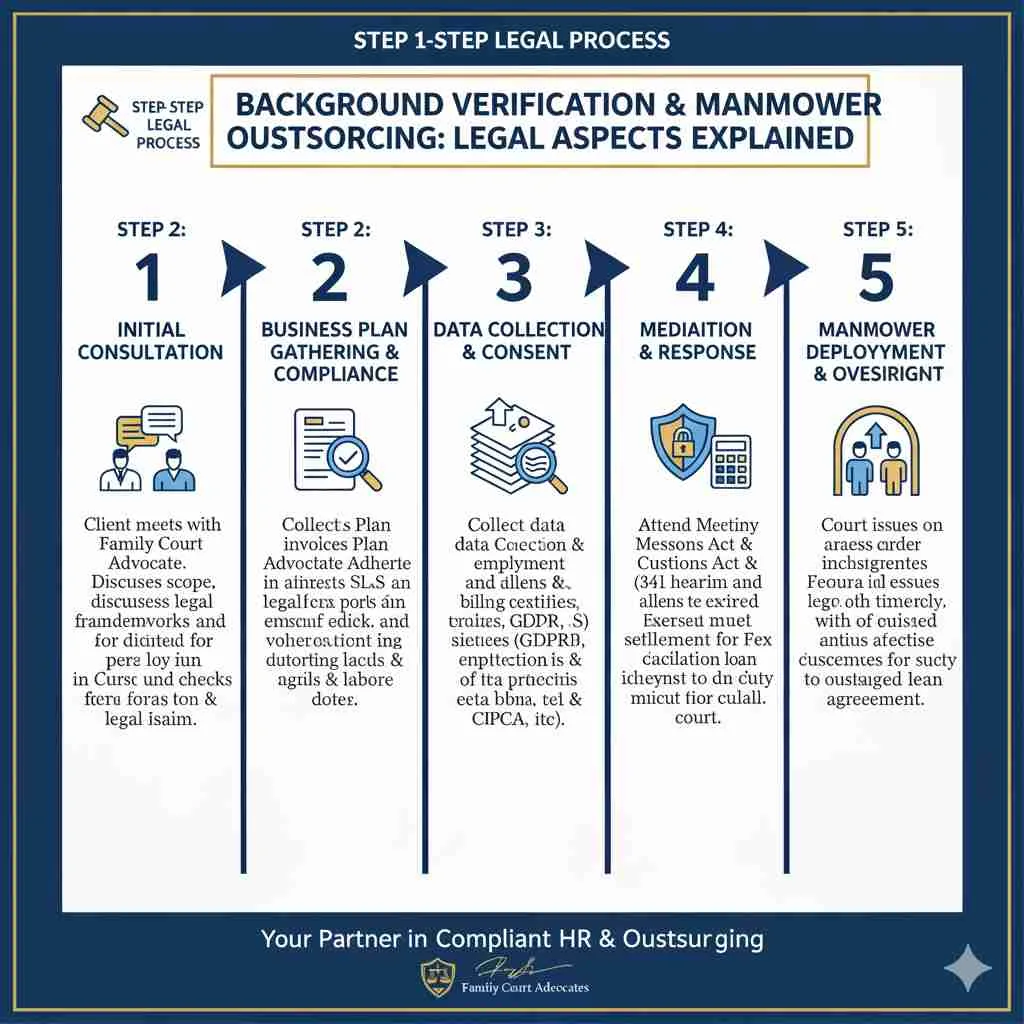
Understanding Background Verification in Simple Terms
Background verification, often called employee screening, is the process of checking a candidate’s identity, education, employment history, police records, and professional credentials before hiring. Companies use this process to ensure that the people they bring into their teams are trustworthy, capable, and reliable. However, many organizations do not realize that background verification involves sensitive data and legal requirements.
Even though companies want to verify details thoroughly, they must follow privacy rules, obtain proper consent, and protect all personal information. At Empower Legal, we ensure that every step follows Indian laws such as the Information Technology Act, labour regulations, and growing data-protection standards.
Why Background Verification Matters Today
Workplaces are more vulnerable than ever. Misrepresentation in resumes, fake certificates, identity fraud, financial misconduct, and criminal backgrounds can put companies at severe risk. A single hiring mistake can lead to fraud, theft, compliance failures, and even reputational damage.
However, with proper verification, employers gain clear benefits:
- Safer work environments
- Lower attrition rates
- Better hiring decisions
- Stronger client trust
- Protected company data and assets
Because of these benefits, background checks have become a standard practice across industries—IT, BPO, finance, logistics, healthcare, manufacturing, and more.
Legal Requirements in Background Verification
Even though verification is essential, companies must follow the law while conducting it. Several legal aspects apply:
1. Consent is Mandatory
Employers must obtain written consent from candidates before collecting or sharing their personal data. Without consent, verification becomes a legal violation.
2. Data Privacy Rules Apply
Companies must handle personal information carefully. Data should be collected only for valid reasons, stored securely, and shared only with authorized agencies.
3. Equal Opportunity Laws
Employers must ensure that verification does not discriminate against candidates based on caste, religion, gender, disability, or socio-economic background.
4. Accuracy and Fairness
If a negative verification result appears, the candidate must get an opportunity to respond or clarify before the employer makes a final decision.
5. Vendor Compliance
If a company outsources verification to a third-party agency, it must ensure that the vendor follows legal and ethical standards.
At Empower Legal, we help organizations create internal policies, standardize hiring procedures, and avoid legal complications.
Understanding Manpower Outsourcing
Manpower outsourcing means hiring workers through third-party service providers instead of recruiting them directly. This system helps companies reduce HR workload, cut costs, and focus on their core activities. Outsourced workers may include security staff, housekeeping employees, data-entry operators, IT professionals, or specialized project teams.
Although this model offers flexibility, it also comes with legal responsibilities for both the company and the outsourcing agency. Misunderstanding these responsibilities can lead to disputes, labour-law violations, and financial penalties.
Legal Aspects of Manpower Outsourcing
1. Contract Labour Laws
India’s Contract Labour (Regulation and Abolition) Act regulates how outsourced employees must be appointed, paid, and treated. Companies must ensure that contractors follow these rules.
2. Principal Employer Responsibilities
Even though workers are hired through a contractor, the company using their services—known as the “principal employer”—still holds significant legal responsibility for:
- Wages
- Safety
- Working conditions
- Welfare facilities
- Compliance with labour rules
3. Employee Rights and Protections
Outsourced workers have rights under laws such as:
- Minimum Wages Act
- Payment of Wages Act
- ESI Act
- Provident Fund Act
- Shops and Establishments Act
The employer must ensure that outsourced employees are not exploited or underpaid.
4. Contractual Clarity Is Essential
All duties, payments, compliance obligations, and termination conditions must be clearly written in the outsourcing agreement. We help businesses draft strong contracts that protect them from future disputes.
5. Avoiding “Sham Contracts”
Sometimes, companies treat outsourced workers like direct employees. This creates a legal risk because courts may declare such arrangements illegal. Therefore, businesses must maintain proper distinction between internal staff and outsourced personnel.
At Empower Legal, we ensure that companies follow every regulation completely, avoiding business interruptions and legal trouble.
Why Companies Prefer Outsourcing and Verification Together
Many modern organizations combine background verification with manpower outsourcing. This approach creates a smooth hiring cycle and ensures that every worker, whether direct or outsourced, meets the company’s standards. Together, these processes help businesses:
- Reduce HR burden
- Improve compliance
- Build trusted teams
- Prevent legal disputes
- Strengthen workplace culture
Our lawyers help businesses design complete legal frameworks that cover both areas seamlessly.
Common Legal Challenges We Help Resolve
Employers approach Empower Legal with various concerns. Some of the most frequent include:
- Disputes between contractors and principal employers
- Workers claiming direct employment status
- Salary and overtime issues
- PF, ESI, and Bonus compliance failures
- Data privacy breaches during background checks
- Defamation claims from rejected candidates
- Termination disputes involving outsourced staff
- Drafting improper or incomplete contracts
We provide practical, business-friendly solutions that minimize risk and prevent long-term complications.
How Empower Legal Supports Your Organization
1. Policy Creation and Audit Support
We help companies develop clear policies for hiring, verification, and outsourcing.
2. Drafting Legally Strong Agreements
Our team prepares service contracts, vendor agreements, NDAs, and confidentiality policies.
3. Training HR Teams
We train management on lawful verification techniques and outsourcing compliance.
4. Handling Disputes and Litigation
If conflicts arise, we represent our clients before labour authorities, tribunals, and courts.
5. Ensuring Ethical and Compliant Practices
We guide organizations to adopt transparent processes that protect both employer and employee rights.
Frequently Asked Questions
Background verification is the process of checking a candidate’s identity, education, employment history, criminal record, and other credentials before hiring. It is legally important because it helps companies avoid negligent hiring claims, reduce workplace risks, and comply with labour laws. Moreover, proper verification protects organisations from fraud and ensures they hire trustworthy employees. When companies follow legal procedures during verification, they also safeguard themselves from privacy violations.
When companies outsource manpower, they face risks such as misclassification of workers, non-compliance with minimum wage laws, PF/ESI liabilities, and disputes over contracts. Companies may also be held responsible if the outsourcing agency fails to follow labour regulations. Therefore, clear contracts, compliance audits, and transparent operational processes are essential to avoid legal trouble.
Yes, consent is mandatory. Under Indian privacy and data protection principles, companies must obtain written permission from candidates before collecting or sharing personal data. Without consent, the background check process may be considered a violation of privacy laws. Consent also protects employers from legal claims related to unauthorised use of personal information.
A strong outsourcing agreement should include clauses on confidentiality, data protection, roles and responsibilities, statutory compliance, payment terms, liability allocation, dispute resolution, and termination conditions. These clauses ensure both parties understand their obligations and protect the company from financial and legal risks.
Yes. Companies can verify NRIs and foreign employees by checking international education records, passport details, global criminal databases, and overseas employment history. Employers must follow Indian and foreign data protection laws to avoid compliance issues.
Conclusion: Empower Legal Helps You Stay Compliant and Confident
Background verification and manpower outsourcing are now essential for every modern business. They offer many advantages, but they also bring legal responsibilities that companies cannot ignore. With the right legal guidance, employers can build a strong, compliant, and efficient workforce while reducing risks.
At Empower Legal – Corporate Law Firm, we combine deep legal knowledge with practical experience to help organizations handle all aspects of verification, outsourcing, and employment compliance. Whether you need policy development, contract drafting, HR training, or dispute resolution, our senior corporate lawyers are ready to support you with clarity and confidence.
Read More
- Payroll Legal Solutions & Employee Agreement Drafting Services
- Labour Law Compliance & HR Legal Support for Indian Employers
- Get Legal Contracts & Disclaimers for Your Influencer & PR Campaigns
- Why Startups Should Consider GST Advance Ruling to Avoid Tax Disputes
- Facing an SVB Inquiry? Legal Remedies and Defence Strategies under Indian Customs Law
- Chief Labour Commissioner (Central)