
Starting a business is an exciting journey, filled with innovation, ambition, and hope. Yet, as every entrepreneur soon realizes, the path to success also requires strong legal foundations. In India, especially today, Startups & MSMEs play a major role in economic growth. They create jobs, attract investments, and introduce new ideas to the market. However, without proper legal guidance, even the most promising business can face unnecessary challenges.
At Empower Legal – Corporate Law Firm, we understand this reality better than anyone. Therefore, we work closely with emerging businesses, helping them set up smoothly and grow confidently. In this article, we explain the essential legal aspects of starting and managing a Startup or MSME in India, using simple language and practical insights.
Startups & MSMEs: Legal Advisory & Business Setup Services in India – Empower Legal
1. The Growing Importance of Startups and MSMEs in India
In recent years, India has become a global hub for entrepreneurs. Government initiatives such as Startup India, Digital India, Skill India, and various MSME subsidies have encouraged thousands of young innovators to begin new ventures. Moreover, with easier access to funding, mentorship, and technology, more people than ever before are entering the world of business.
However, growth brings responsibilities. Every business, small or large, must comply with laws related to registration, taxation, employment, intellectual property, and contracts. When these areas are handled properly, the business enjoys stability. But if they are ignored, the business may face disputes, penalties, or delays.
2. Choosing the Right Business Structure
One of the first decisions every entrepreneur must make is choosing the right business entity. This decision affects taxes, liability, compliance, and even future investment.
Popular business structures in India include:
- Sole Proprietorship – Simple and low-cost, suitable for individual operators.
- Partnership Firm – Shared ownership with partners; less compliance, but unlimited liability.
- Limited Liability Partnership (LLP) – Popular among professionals; offers flexibility and limited liability.
- Private Limited Company (Pvt Ltd) – Preferred by Startups and investors; strong legal framework and credibility.
- One Person Company (OPC) – Ideal for solo founders who want the benefits of a company.
At Empower Legal, we guide clients through each option, explaining the pros and cons in clear, practical terms. This ensures entrepreneurs choose the structure that truly suits their vision.
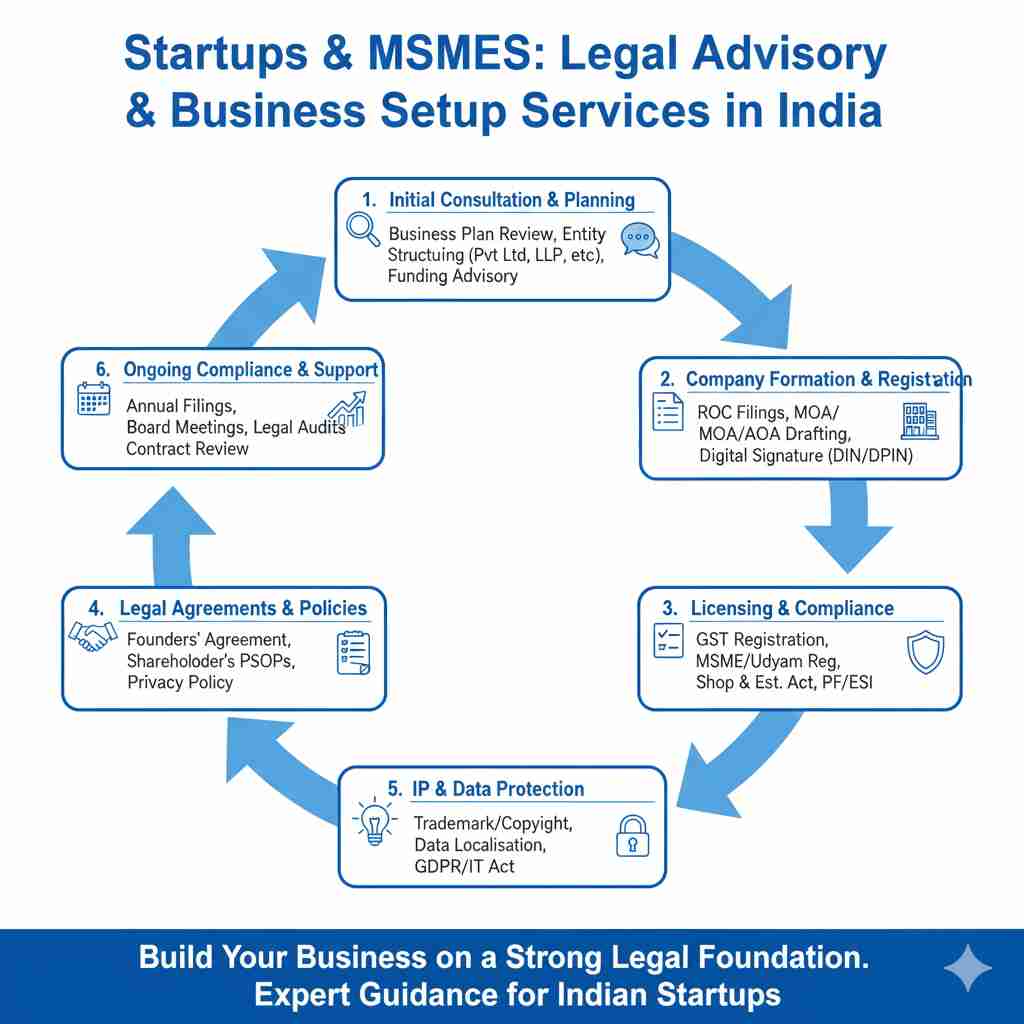
3. Business Registration and Documentation
After selecting the business structure, proper registration is essential. Today, India has simplified most registration processes, but they still require accuracy and timely documentation.
Key registrations include:
- Company/LLP incorporation with MCA
- PAN and TAN
- GST registration
- MSME/Udyam Registration
- Shop & Establishment license
- Professional Tax registration (state-wise)
Transitioning from idea to a legally recognized entity becomes much smoother when professionals handle the process. Our team takes responsibility for drafting documents, filing forms, and ensuring compliance.
4. Legal Agreements Every Startup Needs
Once the business is registered, the next crucial step is creating strong legal agreements. These documents protect the founders, employees, and clients, preventing misunderstandings later.
Some essential agreements include:
- Founder’s Agreement – Defines roles, equity, responsibilities, and exit clauses.
- Non-Disclosure Agreement (NDA) – Protects confidential information.
- Employment Agreements – Clearly state job roles, salary, and company policies.
- Vendor and Supplier Contracts – Ensure smooth operations and timely payments.
- Service Level Agreements (SLAs) – Prevent disputes over deliverables.
- Shareholders’ Agreements – Important for investor-backed startups.
With proper agreements in place, businesses operate with confidence and professionalism.
5. Intellectual Property Protection
In today’s competitive market, ideas are everything. Whether it’s a unique brand name, a new technology, or a creative design, protecting intellectual property (IP) is essential.
Types of IP protection in India:
- Trademark – Protects brand name, logo, or tagline.
- Copyright – Secures creative works, software, content, and designs.
- Patent – Protects new inventions and technical processes.
- Design Registration – Safeguards product aesthetics.
We help startups identify what needs protection, prepare filings, and monitor renewals. This protects their brand identity and prevents competitors from copying their work.
6. Compliance and Regulatory Requirements
Every business must follow regulatory rules. Although Startup India has reduced many burdens, compliance remains important for long-term success.
Typical compliance includes:
- ROC (Registrar of Companies) filings
- Annual returns
- Board meeting documentation
- GST filings
- TDS/TCS compliance
- Tax audits
- Labour law compliance
By maintaining accurate records, businesses avoid fines and maintain credibility with banks, investors, and government bodies.
7. Funding and Investment Support
Most Startups require funding at some stage. Whether they approach angel investors, venture capitalists, banks, or government schemes, legal guidance is essential.
Important areas include:
- Term sheets
- Due diligence
- Share subscription agreements
- ESOP (Employee Stock Option Plan) creation
- Investor rights agreements
- Compliance with FEMA for foreign investment
Empower Legal helps founders prepare legally strong documents that impress investors and protect the business.
8. Employment Law and HR Policies
As a Startup grows, it begins hiring employees. Therefore, it must comply with labour laws.
Essential HR elements include:
- Appointment letters
- Salary structure
- Leave policies
- POSH (Sexual Harassment) compliance
- Workplace safety rules
- Termination policies
Clear HR policies build a healthy work culture and reduce disputes.
9. MSME Benefits and Protection
MSMEs enjoy several advantages, including credit support, subsidies, faster payments, and legal protection under the MSME Act.
Important MSME benefits include:
- Priority lending
- Interest subsidies
- 45-day payment rule from buyers
- Protection under MSME Samadhaan
- Participation in government tenders
We help clients register under Udyam and claim benefits without delays.
10. Handling Business Disputes
Despite careful planning, disputes may arise—whether with partners, employees, clients, or vendors. Quick resolution is essential for business stability.
Common disputes include:
- Contract breaches
- Payment delays
- IP infringement
- Employment disputes
- Partnership disagreements
At Empower Legal, we focus on mediation first, because it saves time and money. However, when necessary, we represent clients strongly in court or arbitration.
11. Support for Foreign Entrepreneurs and NRIs
India welcomes foreign founders and investors, but they must comply with specific laws.
We assist with:
- FDI compliance
- FEMA regulations
- Company incorporation for foreign nationals
- Cross-border contracts
- Liaison and branch office setup
With proper guidance, foreign entrepreneurs can operate smoothly and legally.
12. Why Choose Empower Legal – Corporate Law Firm?
Our firm’s philosophy is simple: empower businesses by giving them strong legal foundations.
We stand out because:
- We explain legal matters in simple language.
- We provide end-to-end business setup support.
- We offer transparent pricing.
- We respond quickly and professionally.
- We combine legal expertise with business understanding.
- We support long-term growth, not just initial setup.
When a Startup or MSME works with us, they gain more than a law firm—they gain a legal partner.
Frequently Asked Questions
A new business usually needs several essential registrations, depending on its structure and industry. Most startups begin by choosing their business form—sole proprietorship, partnership, LLP, or private limited company. After that, they must obtain a PAN, TAN, GST registration, Shops & Establishment license, and, if applicable, MSME Udyam Registration. Some businesses may also require sector-specific licenses such as FSSAI, import-export code, trade license, or environmental clearance.
Choosing the right structure affects taxation, compliance, investment opportunities, liability, and daily operations. A legal advisor studies the founder’s goals, business model, funding plans, and risk level. Based on this analysis, they recommend the most suitable structure. For example, LLPs offer limited liability with flexible operations, while private limited companies suit startups seeking investors. This guidance prevents future legal and financial complications.
Businesses must protect themselves with strong agreements such as founder agreements, employment contracts, vendor agreements, non-disclosure agreements, service contracts, and data-protection policies. These documents prevent disputes, ensure clarity, and improve professionalism. A legal team drafts customized agreements to safeguard the company’s interests.
Yes, legal advisors prepare investment-ready documentation, including term sheets, shareholder agreements, compliance checks, and due-diligence reports. They ensure that the business follows SEBI, RBI, and Companies Act rules while negotiating fair terms with investors.
Compliance ensures that the business follows tax laws, labor rules, filings, and licensing requirements. Proper compliance helps avoid penalties, builds investor confidence, and supports smooth expansion. Legal advisors monitor deadlines and maintain all statutory records, reducing risks for the business.
Conclusion
The journey of building a Startup or MSME is both exciting and challenging. While ideas and energy drive the business forward, legal clarity ensures the business remains stable and secure. By understanding business structure, registration, compliance, agreements, funding, and dispute resolution, entrepreneurs can avoid risks and focus on growth.
At Empower Legal – Corporate Law Firm, we guide businesses at every step—from the very first idea to full-scale expansion. With the right legal support, entrepreneurs can build strong foundations, scale confidently, and create a lasting impact.
Read More
- Background Verification & Manpower Outsourcing: Legal Aspects Explained
- Payroll Legal Solutions & Employee Agreement Drafting Services
- Labour Law Compliance & HR Legal Support for Indian Employers
- Get Legal Contracts & Disclaimers for Your Influencer & PR Campaigns
- Why Startups Should Consider GST Advance Ruling to Avoid Tax Disputes
- Ministry of MSME, Government of India — MSME portal