
Legal Advisory – India’s freight, courier, and logistics sector plays a vital role in keeping the economy moving. From transporting raw materials to delivering online orders at the doorstep, logistics companies form the backbone of trade and commerce. However, while growth opportunities are huge, legal challenges are equally complex. Therefore, strong legal advisory is not a luxury but a necessity.
At Empower Legal – Corporate Law Firm, we help freight, courier, and logistics companies navigate legal risks, comply with regulations, and grow with confidence. Through this article, we explain why legal support is essential, what laws apply, and how professional legal guidance protects your business.
Legal Advisory for Freight, Courier & Logistics Companies in India – Empower Legal
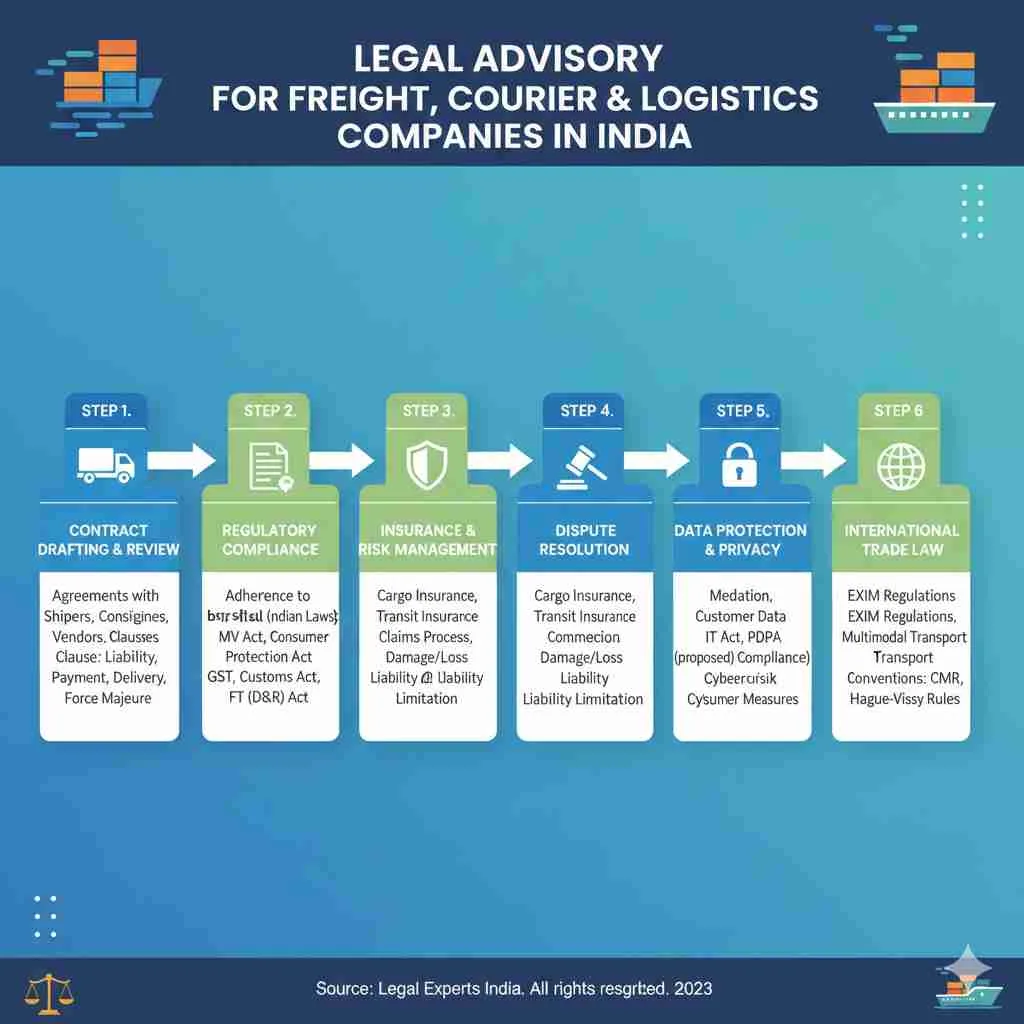
Understanding the Logistics Industry in India
The logistics sector in India includes freight forwarders, courier companies, warehousing providers, transport operators, and supply chain managers. These businesses deal with goods, vehicles, contracts, employees, customs authorities, and multiple state and central laws every day.
Moreover, with the rise of e-commerce, cross-border trade, and digital platforms, logistics operations have become faster but legally more sensitive. As a result, even a small legal mistake can lead to penalties, disputes, or loss of reputation.
Why Legal Advisory Is Crucial for Logistics Companies
Running a logistics business involves much more than moving goods from one place to another. Every activity is governed by law. Therefore, legal advisory helps in avoiding risks before they turn into serious problems.
Firstly, legal experts ensure compliance with regulatory requirements. Secondly, they help draft and review contracts. Thirdly, they protect the company during disputes. Most importantly, they allow business owners to focus on growth while lawyers handle legal complexities.
Business Formation and Licensing Support
The journey of a logistics company begins with proper registration and licensing. Choosing the right business structure is the first legal step.
Company Registration and Structuring
Logistics businesses can operate as proprietorships, partnerships, LLPs, or private limited companies. Each structure has its own legal and tax implications. Therefore, expert legal advice helps you select the most suitable model based on scale, liability, and future expansion plans.
Mandatory Licenses and Registrations
Logistics companies must obtain multiple licenses, including:
- GST registration
- Transport permits
- Shop and establishment registration
- Trade licenses
- Import Export Code (IEC) for international operations
Legal advisors ensure timely registrations and prevent compliance gaps that may attract penalties.
Contract Drafting and Agreement Management
Contracts are the backbone of logistics operations. Every movement of goods depends on written agreements. Hence, poorly drafted contracts can expose businesses to heavy losses.
Key Agreements in Logistics
Logistics companies commonly deal with:
- Freight forwarding agreements
- Courier service agreements
- Warehousing contracts
- Vendor and transporter agreements
- Service level agreements (SLAs)
Legal advisory ensures that these contracts clearly define responsibilities, payment terms, liability limits, and dispute resolution clauses.
Risk Reduction Through Strong Contracts
Well-drafted contracts reduce misunderstandings and protect companies during disputes. Moreover, they help enforce rights when customers delay payments or breach terms.
Compliance with Transport and Motor Laws
Transport operations are regulated under various motor and transport laws in India. Therefore, compliance is essential for smooth functioning.
Motor Vehicles and Transport Regulations
Fleet operators must comply with:
- Motor Vehicles Act
- Vehicle permits and fitness certificates
- Driver licensing and insurance requirements
Legal advisors help companies stay compliant and handle notices, penalties, or accidents legally.
Road Safety and Liability Issues
In case of accidents, cargo damage, or delays, logistics companies may face legal claims. Therefore, legal support is crucial in managing liability, insurance claims, and compensation matters.
GST and Tax Compliance for Logistics Businesses
Taxation is one of the most challenging areas for logistics companies. Since operations often involve multiple states, GST compliance becomes complex.
GST on Freight and Courier Services
Different GST rates apply depending on the type of service, goods transported, and distance. Legal and tax advisors help companies:
- Classify services correctly
- File accurate GST returns
- Avoid input tax credit disputes
Handling GST Notices and Audits
In case of GST scrutiny or audits, legal representation becomes essential. Professional advisory ensures proper responses and minimizes financial exposure.
Customs and Cross-Border Trade Advisory
Many logistics companies deal with international shipments. Consequently, customs laws play a major role.
Import and Export Compliance
Customs regulations govern documentation, valuation, duty payment, and clearance procedures. Legal advisors assist with:
- Customs compliance
- Import-export documentation
- Handling detention or confiscation issues
Resolving Customs Disputes
When shipments are delayed or penalties are imposed, legal experts represent logistics companies before customs authorities and appellate bodies.
Employment and Labour Law Compliance
Logistics companies employ drivers, warehouse staff, delivery agents, and administrative teams. Hence, labour law compliance is critical.
Key Labour Laws Applicable
These include:
- Employees’ Provident Fund Act
- Employees’ State Insurance Act
- Minimum Wages Act
- Payment of Wages Act
- Industrial Disputes Act
Legal advisors ensure proper employment contracts, wage compliance, and dispute handling.
Managing Workforce Disputes
Labour disputes can disrupt operations and damage brand reputation. Therefore, legal guidance helps resolve conflicts through lawful and timely action.
Data Protection and Technology Laws
Modern logistics companies rely heavily on technology, tracking systems, and customer data. As a result, data protection laws become important.
Data Privacy and IT Compliance
Companies must protect customer and shipment data. Legal advisory ensures compliance with:
- Information Technology Act
- Data protection and cybersecurity norms
This reduces the risk of data breaches and legal action.
Dispute Resolution and Litigation Support
Disputes are unavoidable in logistics operations. However, with proper legal support, they can be managed efficiently.
Common Disputes in Logistics
Disputes may arise due to:
- Cargo damage or loss
- Delayed deliveries
- Payment defaults
- Contract breaches
Legal advisors help resolve disputes through negotiation, arbitration, or litigation.
Alternative Dispute Resolution
Many logistics contracts include arbitration clauses. Legal experts represent companies in arbitration proceedings, saving time and costs.
Risk Management and Legal Audits
Prevention is always better than cure. Therefore, regular legal audits help logistics companies identify risks early.
Legal Due Diligence
Legal advisors review contracts, licenses, and compliance records to identify gaps. Consequently, businesses can correct issues before authorities take action.
Policy and Compliance Frameworks
Establishing internal compliance policies improves transparency and reduces legal exposure. Legal experts help design and implement such frameworks.
Why Choose Empower Legal – Corporate Law Firm
At Empower Legal – Corporate Law Firm, we understand the unique challenges faced by freight, courier, and logistics companies in India. Our legal advisory goes beyond problem-solving. We focus on long-term business protection and growth.
Our Strengths
- Deep knowledge of logistics and transport laws
- Practical and business-friendly legal solutions
- Strong contract drafting and negotiation skills
- Efficient dispute resolution support
- Proactive compliance management
Moreover, we believe in clear communication and simple legal advice that business owners can easily understand.
Supporting Growth and Expansion
As logistics companies expand into new states or international markets, legal complexities increase. Therefore, ongoing legal support becomes essential.
Empower Legal assists businesses during mergers, partnerships, fleet expansion, warehouse leasing, and cross-border collaborations. As a result, companies can scale operations with confidence and legal certainty.
Frequently Asked Questions
Freight, courier, and logistics companies operate under multiple central and state laws. Legal advisory helps them comply with transport regulations, GST laws, customs rules, labour laws, and contract requirements. With proper legal support, companies can avoid penalties, reduce disputes, and manage risks effectively while focusing on smooth operations and business growth.
Logistics businesses require well-drafted freight agreements, courier service contracts, warehousing agreements, vendor contracts, and service level agreements. Legal advisors ensure these contracts clearly define responsibilities, payment terms, liability limits, timelines, and dispute resolution methods. Strong contracts protect companies from losses caused by delays, damages, or payment defaults.
GST compliance in logistics is complex due to multi-state operations and varying service classifications. Legal advisory helps companies determine correct GST rates, manage input tax credit, file accurate returns, and respond to GST notices or audits. This reduces financial risks and ensures uninterrupted business operations.
For cross-border logistics, companies must comply with customs laws, import-export regulations, and documentation standards. Legal advisors assist with customs clearance issues, duty disputes, detention of goods, and representation before customs authorities. This ensures faster resolution and protects companies from heavy penalties.
Empower Legal provides end-to-end legal advisory for logistics companies, including business setup, licensing, contract drafting, compliance management, dispute resolution, and risk assessment. The firm offers practical, business-focused legal solutions that help freight and logistics companies operate confidently, remain compliant, and grow sustainably. Clients also receive continuous guidance aligned with changing laws and regulations.
Conclusion
The freight, courier, and logistics industry in India offers immense opportunities. However, legal challenges can slow down growth if not handled properly. From business formation and contracts to tax compliance and dispute resolution, legal advisory plays a key role at every stage.
With the right legal partner, logistics companies can reduce risks, ensure compliance, and focus on delivering excellence. Empower Legal – Corporate Law Firm stands committed to supporting logistics businesses with reliable, practical, and proactive legal solutions.
Read More
- Compliance Services for Skill Development & Corporate Training Firms
- Trademark & IP Protection for Coaching Centers & Educational Brands
- Legal Solutions for EdTech Startups & Online Course Platforms in India
- Export-Import Legal Consultancy for Indian Businesses
- Franchise Agreement Drafting & Compliance Services by Experts
- PM GatiShakti National Master Plan: