
In today’s fast-moving business world, goods must travel safely, quickly, and efficiently. As a result, transportation and warehousing play a critical role in supply chains. However, behind every successful shipment or storage operation lies a strong legal contract. Without clear agreements, businesses face delays, disputes, losses, and legal risks. At Empower Legal: Corporate Law Firm, we help businesses protect their interests by drafting clear, enforceable, and business-friendly transportation & warehousing contracts. This article explains why these contracts matter, what they should include, and how professional legal drafting adds long-term value.
Drafting Transportation & Warehousing Contracts – Law Firm Services: Empower Legal: Corporate Law Firm
Why Transportation and Warehousing Contracts Matter
Transportation and warehousing contracts define the relationship between shippers, carriers, logistics providers, and warehouse operators. These agreements set expectations, assign responsibilities, and reduce uncertainty.
Without proper contracts, businesses may face:
- Unclear liability for damaged or lost goods
- Payment disputes and hidden charges
- Delays in delivery or storage access
- Regulatory and compliance issues
Therefore, well-drafted contracts ensure clarity, accountability, and legal protection for all parties involved.
Understanding Transportation Contracts
Transportation contracts govern how goods move from one place to another. They apply to road, rail, sea, and air transport. These contracts also cover domestic and international shipments.
Key Elements of Transportation Contracts
A well-structured transportation contract usually includes:
- Scope of services and routes
- Delivery timelines and service levels
- Freight charges and payment terms
- Liability for loss, damage, or delay
- Insurance requirements
- Compliance with transport laws and regulations
Because transportation laws differ across regions and modes, legal precision is essential.
Understanding Warehousing Contracts
Warehousing contracts regulate the storage of goods. These agreements define how warehouses receive, store, handle, and release goods.
Key Elements of Warehousing Contracts
A strong warehousing agreement typically covers:
- Description of storage services
- Storage conditions and handling standards
- Access and retrieval procedures
- Inventory management and reporting
- Liability limits and risk allocation
- Termination and exit procedures
As businesses rely more on third-party warehouses, these contracts play a vital role in protecting assets.
Why Legal Drafting Is Essential
Many businesses rely on templates or standard agreements. However, generic contracts often fail to address specific business risks.
Legal drafting ensures that:
- Contract terms match business operations
- Legal obligations are clear and enforceable
- Risks are fairly allocated
- Dispute resolution is well defined
At Empower Legal, we customize every contract to suit the client’s industry, scale, and risk profile.
Common Risks Without Proper Contracts
Without professional legal drafting, businesses may face:
- Unlimited liability for losses
- Ambiguous responsibility for delays
- Disputes over freight rates or storage fees
- Non-compliance with regulatory requirements
- Costly litigation and operational disruption
Therefore, investing in legal drafting upfront saves time, money, and stress later.
Our Approach to Drafting Transportation Contracts
At Empower Legal, we follow a structured and client-focused approach.
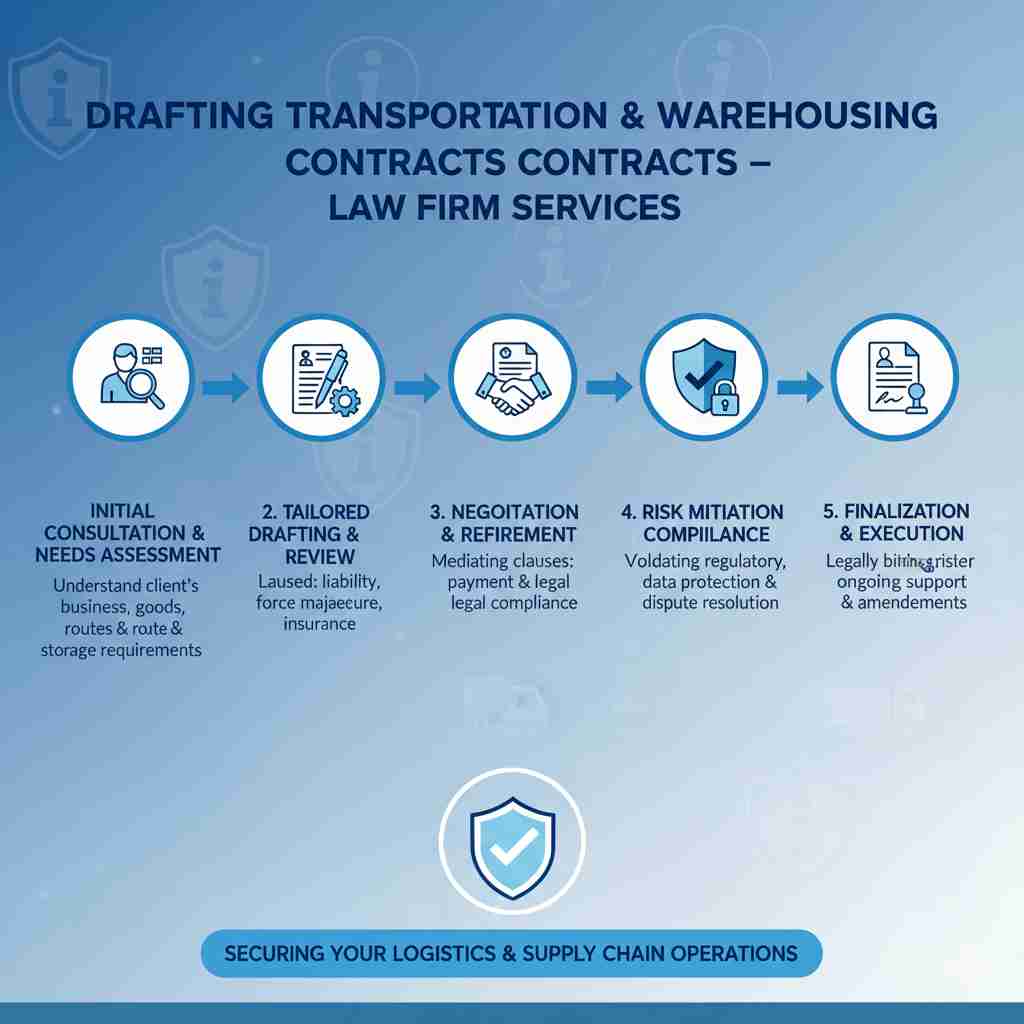
Step 1: Understanding Your Business
First, we understand your logistics model, volume, routes, and partners. This allows us to tailor contracts that reflect real operations.
Step 2: Risk Identification
Next, we identify potential legal and commercial risks. These may include cargo loss, delays, customs issues, or third-party involvement.
Step 3: Customized Drafting
Then, we draft clear clauses that define responsibilities, limits liability, and ensure compliance with applicable laws.
Step 4: Review and Negotiation Support
Finally, we assist in negotiations to ensure fair terms and long-term business relationships.
Our Approach to Drafting Warehousing Contracts
Warehousing contracts require careful attention to storage conditions, liability, and inventory control.
Key Focus Areas
- Clear description of storage services
- Allocation of risk for theft, fire, or damage
- Insurance coverage and indemnities
- Audit and inspection rights
- Termination and transition clauses
Through this approach, we help businesses avoid disputes and operational risks.
Compliance with Laws and Regulations
Transportation and warehousing contracts must comply with various laws, including:
- Commercial and contract laws
- Transportation regulations
- Goods carriage rules
- Insurance and safety regulations
Failure to comply may result in penalties or unenforceable contracts. Therefore, legal oversight is critical.
Handling Dispute Resolution Clauses
Disputes can arise despite best efforts. That is why dispute resolution clauses are essential.
We draft clauses that cover:
- Negotiation and mediation
- Arbitration procedures
- Jurisdiction and governing law
By doing so, we help clients resolve disputes efficiently and avoid prolonged litigation.
Benefits of Choosing Empower Legal
Clients choose Empower Legal: Corporate Law Firm because we offer:
- Industry-specific legal expertise
- Practical and business-oriented drafting
- Clear and simple contract language
- Risk-focused legal solutions
- End-to-end legal support
Most importantly, we act as strategic legal partners, not just document drafters.
Who Can Benefit from Our Services
Our transportation and warehousing contract services benefit:
- Manufacturers and exporters
- Importers and distributors
- Logistics and freight companies
- Warehouse operators
- E-commerce businesses
Regardless of size, every business benefits from clear legal protection.
Long-Term Value of Well-Drafted Contracts
Well-drafted contracts:
- Reduce disputes and misunderstandings
- Improve operational efficiency
- Strengthen business relationships
- Protect assets and reputation
Therefore, legal drafting is not an expense—it is an investment.
Frequently Asked Questions
Transportation and warehousing contracts are legal agreements that define how goods are moved, stored, handled, and protected. They clarify roles of shippers, carriers, and warehouse operators. These contracts matter because they allocate risk, set payment terms, limit liability, ensure regulatory compliance, and prevent disputes that can disrupt supply chains and business continuity across domestic and international logistics operations worldwide today.
Key clauses include scope of services, delivery timelines, freight or storage charges, payment schedules, liability limits, insurance obligations, and force majeure events. Contracts should also address compliance with transport laws, safety standards, and documentation requirements. Clear termination clauses and dispute resolution mechanisms further protect businesses from operational uncertainty and unexpected financial exposure during long-term commercial logistics relationships and partnerships globally.
Law firm drafting services ensure contracts are customized, enforceable, and commercially practical. Lawyers identify risks, tailor liability provisions, align terms with business operations, and ensure legal compliance. They also assist during negotiations to balance interests fairly. This professional approach reduces disputes, strengthens relationships, and supports sustainable supply chain growth over time for modern logistics dependent industries, exporters, importers, distributors, worldwide.
Yes, contracts should differ based on transport mode and storage type. Road, sea, air, and rail transport involve different liability rules. Similarly, cold storage, bonded warehouses, and fulfillment centers carry unique risks.
Businesses should seek legal support when entering new logistics arrangements, expanding operations, or facing disputes. Regular contract reviews are also essential as laws and business models evolve.
Conclusion
In conclusion, transportation and warehousing contracts form the backbone of modern supply chains. When drafted carefully, they protect businesses, reduce risk, and support growth. On the other hand, poorly drafted contracts expose businesses to legal and financial uncertainty.
At Empower Legal: Corporate Law Firm, we provide reliable, customized, and legally sound drafting services for transportation and warehousing contracts. We combine legal expertise with business understanding to deliver practical solutions that work in real life.
Read More
- Legal Advisory for Freight, Courier & Logistics Companies in India
- Compliance Services for Skill Development & Corporate Training Firms
- Trademark & IP Protection for Coaching Centers & Educational Brands
- Legal Solutions for EdTech Startups & Online Course Platforms in India
- Export-Import Legal Consultancy for Indian Businesses
- Warehousing Development and Regulatory Authority (WDRA)