
In international trade, customs clearance is a critical process. Exporters and importers must comply with legal, regulatory, and procedural requirements to move goods across borders. However, delays, disputes, and legal complications often occur, causing financial loss and operational disruption.
At Empower Legal, we help businesses navigate these challenges effectively. Our goal is to provide clear, practical, and reliable legal solutions that protect your business while ensuring compliance with customs laws.
Customs Clearance Disputes & Legal Solutions for Exporters & Importers : Empower Legal
Understanding Customs Clearance
Customs clearance is the process by which goods are approved by government authorities for import or export. The process ensures that:
- Duties and taxes are paid correctly
- Regulatory compliance is maintained
- Goods are safe and legal for trade
Customs clearance involves submitting documents such as invoices, bills of lading, shipping bills, and certificates of origin. Any mistake or omission can result in delays, fines, seizure of goods, or legal disputes.
Therefore, understanding customs regulations and procedures is crucial for exporters and importers.
Common Customs Clearance Disputes
Exporters and importers face several types of disputes during customs clearance. Some of the most common include:
1. Classification Disputes
Goods must be classified correctly under the Harmonized System (HS) Code. Incorrect classification can result in higher duties or penalties.
2. Valuation Disputes
Customs authorities determine the value of goods to calculate duties. Disputes arise when authorities disagree with the declared value, causing additional payments or penalties.
3. Documentation Issues
Incomplete, incorrect, or delayed documents often lead to disputes. Common issues include:
- Missing invoices
- Incorrect certificates of origin
- Inaccurate shipping bills
4. Duty and Tax Disputes
Errors in duty calculation or underpayment can result in penalties, interest, and legal notices from customs authorities.
5. Confiscation and Seizure
Goods may be confiscated if customs officers suspect illegal import/export or non-compliance. Resolving these cases often requires legal intervention.
6. Compliance with Import/Export Restrictions
Certain goods require licenses or permits. Violating these rules can lead to disputes or criminal liability.
Legal Framework Governing Customs Clearance in India
Customs disputes are governed by several laws and regulations, including:
- Customs Act, 1962 – Governs import/export duties, valuation, classification, and enforcement.
- Customs Tariff Act, 1975 – Defines tariff structures for different goods.
- Foreign Trade Policy (FTP) – Provides guidelines for imports, exports, and trade incentives.
- Goods and Services Tax (GST) Act – Applies to certain imported goods.
- Customs (Appeals) Rules, 1982 – Establishes procedures for filing appeals against customs orders.
Understanding these laws is essential to prevent disputes and protect your business interests.
Legal Solutions for Customs Clearance Disputes
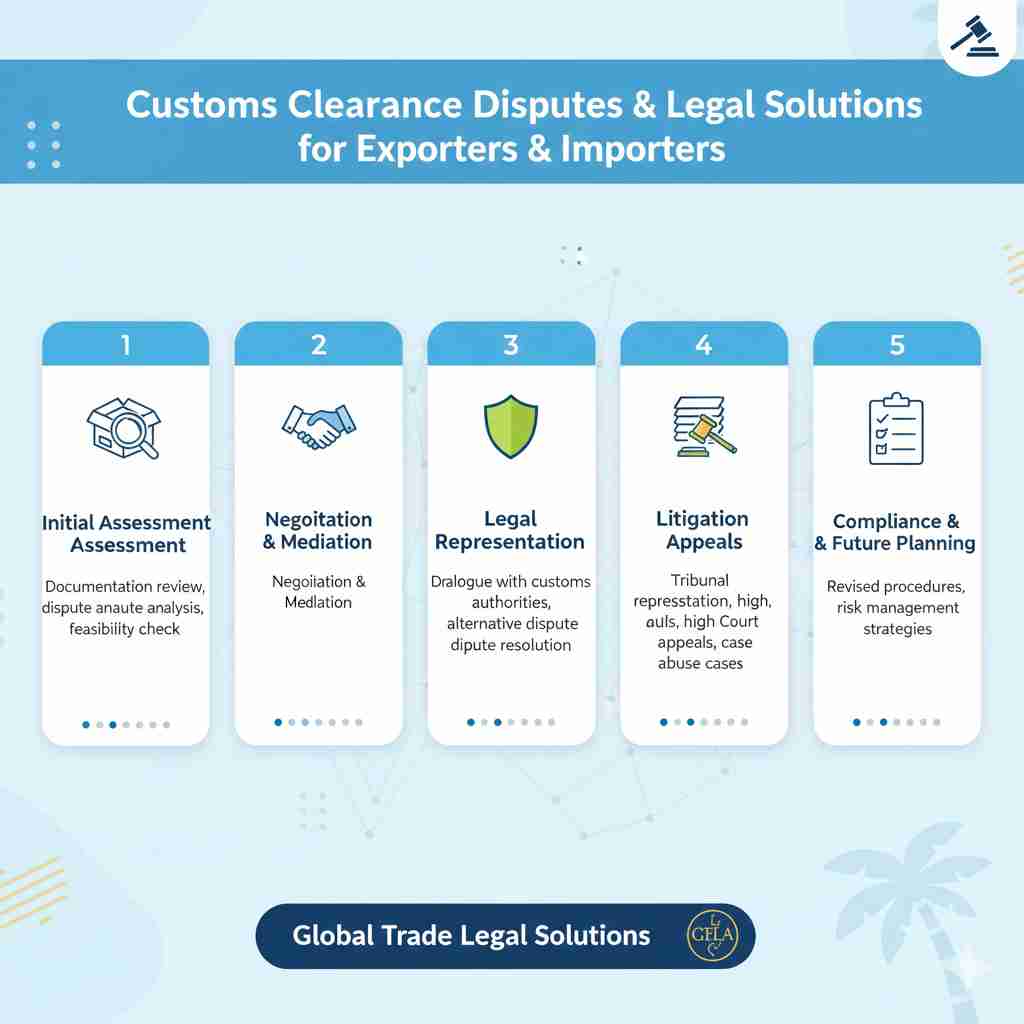
At Empower Legal, we provide practical and strategic solutions to resolve customs disputes efficiently. Our services include:
1. Advisory and Compliance Services
We review trade documents, contracts, and shipment processes to ensure compliance with customs laws. By identifying potential risks early, we help businesses avoid costly disputes.
2. Representation Before Customs Authorities
Our experienced lawyers represent exporters and importers before customs officers, adjudicating authorities, and appellate bodies. We ensure that your case is presented clearly and effectively.
3. Filing Appeals and Legal Remedies
If disputes cannot be resolved administratively, we help businesses file:
- Appeals under the Customs Act
- Writ petitions in High Court
- Representation before the Appellate Tribunal for Customs
4. Valuation and Classification Assistance
We help exporters and importers properly classify goods and declare accurate values to minimize disputes over duties and tariffs.
5. Documentation Review and Legal Audit
Proper documentation is crucial. We conduct audits of trade documents, shipping bills, invoices, and licenses to ensure error-free customs clearance.
6. Negotiation and Settlement
Sometimes disputes can be resolved through negotiation with customs authorities. Our lawyers negotiate penalties, fines, or duty adjustments to reach a fair settlement.
Case Studies: How Legal Intervention Helps
Example 1: Import Valuation Dispute
A company importing machinery faced a valuation dispute, with customs authorities demanding additional duty. Our team reviewed invoices, contracts, and market values, and successfully reduced the penalty by 70%.
Example 2: Export Documentation Issue
An exporter faced delays due to missing certificates of origin. We coordinated with authorities, corrected documentation, and ensured timely shipment without fines.
Example 3: Seizure of Goods
A shipment of electronic goods was seized due to alleged misclassification. Our lawyers prepared detailed legal submissions, attended hearings, and secured the release of goods within two weeks.
These examples highlight how expert legal guidance can save time, money, and business reputation.
Preventive Measures for Exporters and Importers
Preventing disputes is always better than resolving them. We recommend:
- Accurate Classification and Valuation – Use HS codes correctly and declare true market value.
- Complete Documentation – Ensure all invoices, licenses, and certificates are accurate and up to date.
- Timely Filing – Submit shipping bills, GST filings, and permits promptly.
- Legal Audit – Conduct periodic audits of trade processes to detect risks early.
- Professional Guidance – Consult legal experts before initiating imports or exports.
By following these steps, businesses can reduce the risk of disputes and avoid penalties.
Challenges Faced by Exporters and Importers
Exporters and importers in India face several challenges, including:
- Frequent changes in customs regulations
- Delays in shipment clearance due to administrative bottlenecks
- Complex valuation and classification rules
- Risk of confiscation or legal notices
- Navigating multiple authorities for approvals and permits
With legal support, these challenges can be managed efficiently, minimizing disruption to business operations.
Why Choose Empower Legal – Corporate Law Firm?
At Empower Legal, we specialize in customs clearance disputes and trade law. Our approach combines legal expertise, practical strategies, and personalized attention.
We provide:
- Experienced lawyers specializing in customs and trade law
- Proactive solutions to prevent disputes
- Representation before customs authorities and appellate bodies
- Timely advice on documentation, valuation, and classification
- Strategic negotiation to minimize penalties and fines
Our mission is to empower exporters and importers by protecting their rights and ensuring smooth international trade operations.
Frequently Asked Questions
Exporters and importers often encounter disputes such as misclassification of goods under HS codes, incorrect valuation of imports, incomplete or delayed documentation, underpayment or over payment of duties, and seizure of goods by customs authorities. Violating import/export restrictions or failing to obtain proper licenses also leads to disputes.
We provide comprehensive legal support, including advisory services, representation before customs authorities, filing appeals, negotiating settlements, and ensuring compliance with the Customs Act and related regulations. Our team helps businesses minimize penalties, expedite shipments, and resolve disputes efficiently.
If goods are seized, exporters and importers can challenge the seizure by filing appeals under the Customs Act, approaching the Appellate Tribunal for Customs, or seeking writs in High Court. Empower Legal prepares all legal submissions and represents clients to secure the release of goods quickly.
Preventive measures include accurate classification and valuation of goods, timely submission of complete documentation, adherence to licensing requirements, regular audits of compliance procedures, and consulting legal experts before shipments. Proper preparation significantly reduces the risk of disputes and penalties.
Customs clearance disputes are governed primarily by the Customs Act, 1962, Customs Tariff Act, 1975, Foreign Trade Policy, Goods and Services Tax (GST) Act, and the Customs (Appeals) Rules, 1982. Understanding and complying with these laws is essential to avoid penalties and maintain smooth import/export operations.
Conclusion: Securing Your Business Through Legal Expertise
Customs clearance disputes can have significant financial and operational impacts on businesses. Delays, penalties, and legal notices can disrupt exports and imports, affecting your reputation and profitability.
With expert legal guidance from Empower Legal, businesses can navigate the complex customs framework efficiently. From compliance advisory to dispute resolution, we help exporters and importers protect their interests, minimize risk, and maintain seamless trade operations.
International trade demands vigilance, compliance, and legal expertise. By partnering with a trusted law firm, you can focus on growing your business while we handle legal challenges related to customs clearance.
Read More
- Drafting Transportation & Warehousing Contracts – Law Firm Services
- Legal Advisory for Freight, Courier & Logistics Companies in India
- Compliance Services for Skill Development & Corporate Training Firms
- Trademark & IP Protection for Coaching Centers & Educational Brands
- Legal Solutions for EdTech Startups & Online Course Platforms in India
- Central Board of Indirect Taxes and Customs (CBIC)