
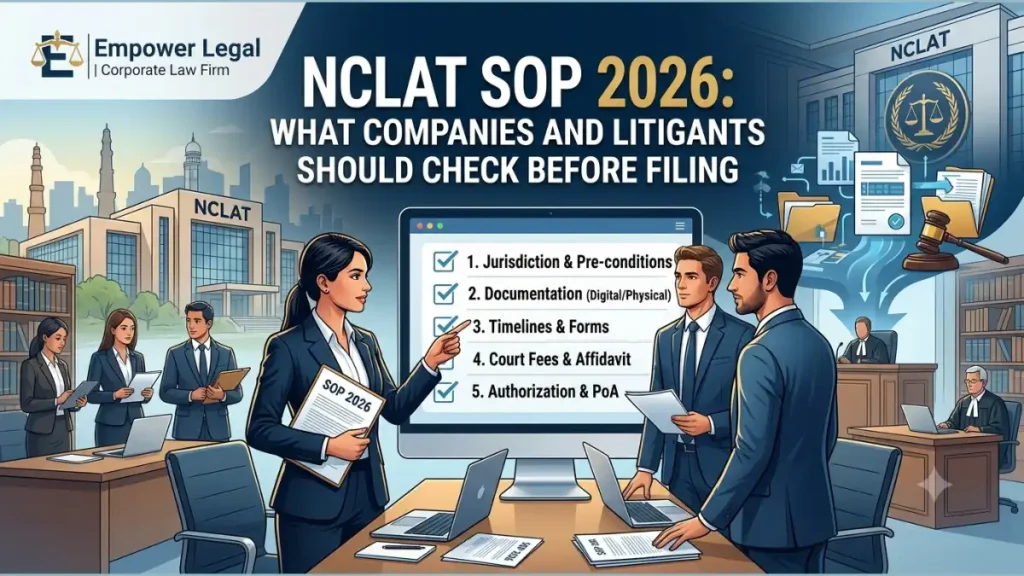
The National Company Law Appellate Tribunal (NCLAT) has published a Standard Operating Procedure dated 10 September 2026 concerning the submission and processing of applications. For companies, directors, creditors, insolvency professionals and advocates, procedural discipline is important because a corporate-law dispute can involve strict statutory timelines, specialised jurisdiction and substantial commercial consequences.
This practical guide explains what businesses should review before approaching NCLAT or responding to an application. The article focuses on preparation and risk management; the current NCLAT SOP itself should always be read together with the applicable statute, rules, regulations, practice directions and orders of the Tribunal.
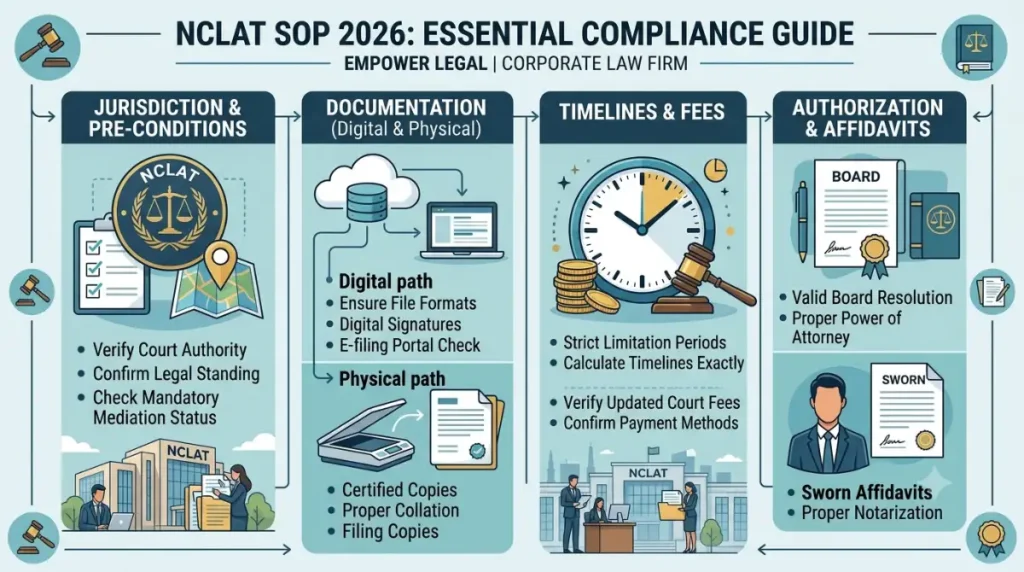
Quick Answer: What Should You Check Before Filing at NCLAT?
- Identify the exact order, application or proceeding involved.
- Confirm that NCLAT is the correct appellate or statutory forum.
- Calculate the applicable limitation period from the relevant order or event.
- Identify the statutory provision under which the proceeding is brought.
- Collect the complete order, pleadings, evidence and relevant correspondence.
- Check whether the required filing format, documents, fees and procedural requirements are satisfied.
- Prepare a precise statement of facts and grounds rather than a general commercial grievance.
- Assess interim relief, stay requirements and the consequences of delay.
- Check whether parallel proceedings exist before NCLT, courts, regulators or other forums.
- Obtain transaction-specific legal advice before filing or responding.
What Is the New NCLAT SOP of 10 September 2026?
NCLAT’s official website records a Standard Operating Procedure dated 10 September 2026 under its materials concerning the submission and processing of applications. The Tribunal also published a related circular on the same date. The official NCLAT website identifies both the Principal Bench and Chennai Bench in connection with the Tribunal’s operations.
The publication of an SOP is a reminder that parties should treat filing and processing requirements as part of substantive case preparation. An advocate should verify the current official SOP and any subsequent circular, practice direction or registry instruction applicable to the particular proceeding before filing.
Read the official NCLAT SOP dated 10 September 2026 and related NCLAT circular.
Why NCLAT Procedure Matters to Businesses
Corporate litigation frequently involves more than the underlying commercial dispute. A company may have to establish jurisdiction, comply with a statutory limitation period, produce a complete documentary record and formulate grounds that fit the relevant legislation. Procedural omissions can create avoidable objections, delay or additional expense.
Businesses should therefore involve counsel early where an NCLT order, insolvency proceeding, company-law dispute or other NCLAT matter may affect control, assets, management, creditors, shareholders or ongoing operations.
NCLAT and the Insolvency Appeal Framework
Under section 61 of the Insolvency and Bankruptcy Code, 2016, a person aggrieved by an order of the Adjudicating Authority under the relevant Part of the Code may appeal to NCLAT. The statutory framework generally provides a 30-day period for filing, with a limited extension where the statutory conditions for condonation are satisfied.
Section 62 provides for an appeal from an NCLAT order to the Supreme Court on a question of law within the period specified by the Code. These statutory provisions make limitation analysis an early-stage issue rather than an administrative formality.
Read the Insolvency and Bankruptcy Code on India Code.
10-Step Pre-Filing Checklist for Companies
1. Identify the impugned order
Obtain the complete signed or authenticated order and record the date of the order, date of receipt and the forum that passed it.
2. Identify the statutory route
Determine the exact provision creating the right of appeal or application. Do not assume that every corporate grievance can be brought before NCLAT.
3. Calculate limitation
Calculate the statutory period from the legally relevant date and document the calculation. Where condonation may be necessary, the reasons and supporting evidence should be assessed before filing.
4. Build the paper book
Collect the order, pleadings, applications, notices, contracts, financial records, correspondence and earlier orders necessary to understand the dispute.
5. Separate facts from grounds
Prepare a concise chronology followed by specific legal grounds. Commercial dissatisfaction alone is not a substitute for a legally sustainable ground.
6. Check parallel proceedings
Identify related matters before NCLT, High Courts, the Supreme Court, regulators, arbitral tribunals or other authorities. The same transaction may appear in multiple proceedings.
7. Assess interim relief
If enforcement or implementation of an order could cause immediate prejudice, obtain advice on whether a stay or other interim relief should be sought and what evidence supports urgency.
8. Verify the current procedural requirements
Before filing, check the latest NCLAT SOP, registry directions, forms, filing requirements and applicable rules. The 10 September 2026 SOP should be checked against any later update.
9. Identify commercial consequences
Consider how the proceeding affects financing, contracts, operations, creditors, employees, shareholders, assets and regulatory relationships.
10. Obtain a written strategy note where appropriate
For material disputes, a written assessment can record the legal issue, procedural route, limitation position, evidence gaps, relief sought, risks and recommended next steps.
What Companies Should Preserve Before a Corporate Dispute Escalates
Preserve board minutes, shareholder resolutions, contracts, invoices, bank records, statutory filings, notices, emails, messages, financial statements and relevant electronic records. A company should also maintain a clear record of who authorised important decisions and when those decisions were made.
Do not selectively preserve only documents that appear favourable. A complete record allows counsel to assess the case accurately and reduces the risk of strategic surprises later.
NCLAT Litigation Is Different From Ordinary Civil Litigation
Corporate and insolvency proceedings operate within specialised statutory frameworks. Jurisdiction may be assigned to tribunals by legislation, and the available relief may differ from ordinary civil remedies. The IBC also contains provisions addressing the jurisdiction of the adjudicating authority and appellate structure.
That is why a company should not automatically treat an NCLAT matter as a conventional civil suit. The governing statute, tribunal rules, regulations, limitation provisions and the specific impugned order must be examined together.
How Corporate Legal Counsel Can Help
Empower Legal’s corporate practice covers company legal advisory, corporate governance and compliance, company litigation, commercial litigation, contracts, insolvency, mergers and acquisitions and related business matters. Its corporate law practice areas provide the broader service framework.
For disputes, see the firm’s company litigation service and commercial litigation service. For transaction documents and risk allocation, its contract-law service and documents drafting service are relevant.
Frequently Asked Questions
What is the NCLAT SOP dated 10 September 2026?
It is a Standard Operating Procedure published by NCLAT concerning the submission and processing of applications. Parties should read the official version and any subsequent directions applicable to their matter.
How long do I have to appeal an NCLT order under the IBC?
Section 61 of the IBC generally provides 30 days, with a limited statutory extension where the requirements for condonation are satisfied. The precise computation should be checked against the facts and current law.
Can every company dispute be filed before NCLAT?
No. Jurisdiction depends on the governing statute, the nature of the order or proceeding and the forum from which the matter arises.
Can an NCLAT order be challenged before the Supreme Court?
Under section 62 of the IBC, an appeal from an NCLAT order may be filed before the Supreme Court on a question of law, subject to the statutory requirements and limitation.
Should a company wait until an adverse order is passed before consulting a lawyer?
For significant corporate or insolvency risks, early advice can help preserve evidence, assess jurisdiction and limitation, and consider available responses before procedural options narrow.
Read More
- Corporate Contracts & Commercial Law: Comprehensive Legal Guide for Businesses
- National Company Law Appellate Tribunal-NCLAT: Expert Corporate Attorneys
- Appeal Against a Private Limited Company Strike Off in India
- Bankruptcy / Insolvency: The Best Corporate Lawyers in Chennai
- Property Legal opinion: How to find the Best Lawyers?
Key Takeaway
The 10 September 2026 NCLAT SOP reinforces the importance of disciplined preparation when applications are submitted and processed. Companies and litigants should identify the correct statutory route, verify jurisdiction, calculate limitation, assemble the evidence, check the latest procedural directions and obtain case-specific advice before filing. The official NCLAT materials should remain the primary reference for current filing requirements.
Legal information notice: This article provides general information and is not a substitute for legal advice. NCLAT procedures, statutory provisions, rules, regulations and registry directions may change. The current official text should be checked before filing or responding to any proceeding.
Need corporate litigation or NCLAT assistance? Empower Legal assists businesses with corporate advisory, compliance, commercial disputes, company litigation and insolvency-related legal matters. Contact Empower Legal for a case-specific consultation.