
Memorandum and Articles of Association – The Memorandum of Association and Articles of Association form a company’s constitutional framework. Every company registered under the Companies Act requires these foundational documents. The Memorandum defines external powers and business scope. Meanwhile, the Articles regulate internal management and governance procedures. Proper drafting prevents disputes among shareholders, directors, and stakeholders. Consequently, companies should align these documents with business objectives and legal requirements. Regulatory authorities closely review incorporation documents during registration and compliance checks. Errors may trigger disputes, penalties, and operational difficulties. Corporate lawyers assist promoters in preparing legally compliant clauses. Sound drafting supports governance, investment, fundraising, and dispute prevention. Empower Legal provides strategic guidance on company incorporation, compliance management, shareholder rights, regulatory filings, and corporate dispute resolution throughout India.
Memorandum and Articles of Association: Drafting Guidelines – Empower Legal – Corporate Law Firm
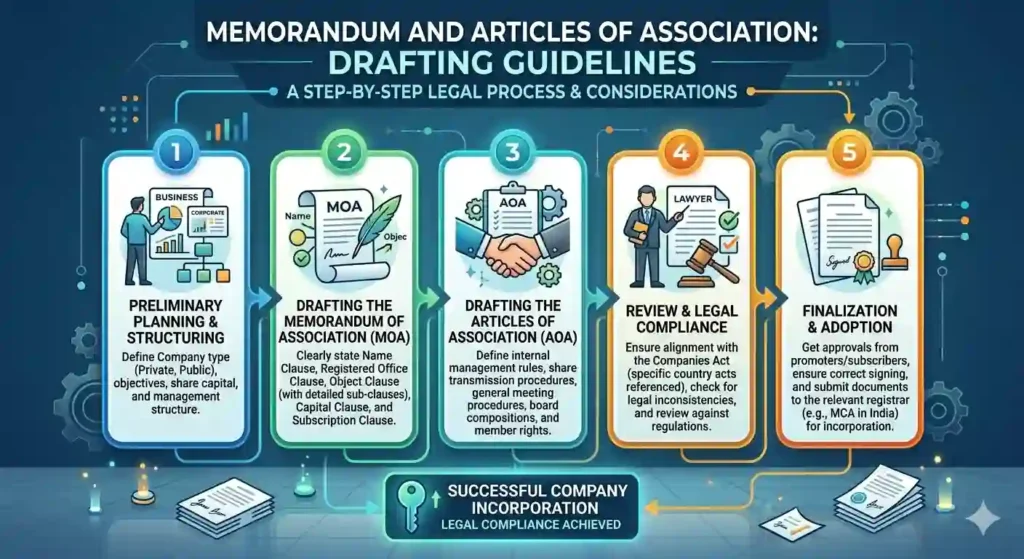
Understanding the Purpose of MOA and AOA
The Memorandum establishes the company’s identity and legal capacity. The Articles govern operational procedures and management structures. Therefore, both documents serve distinct yet interconnected purposes. Companies must draft provisions with precision and clarity. Investors frequently review constitutional documents before funding decisions. Regulatory authorities examine compliance during incorporation and subsequent filings. Moreover, ambiguities often create shareholder disputes and governance challenges. Well-structured clauses improve legal certainty and business continuity. Directors, promoters, and stakeholders rely upon these provisions daily. Companies should periodically review documents after regulatory changes. Professional legal drafting ensures consistency with corporate objectives. Effective constitutional documents strengthen compliance frameworks and reduce litigation risks before tribunals, courts, and regulatory authorities.
Essential Clauses in a Memorandum of Association
A Memorandum contains mandatory clauses prescribed under company law. Each clause defines a specific aspect of corporate existence. Consequently, careful drafting remains essential for legal validity.
| MOA Clause | Purpose |
|---|---|
| Name Clause | Company identity |
| Registered Office Clause | Jurisdiction |
| Objects Clause | Business activities |
| Liability Clause | Member liability |
| Capital Clause | Share capital |
Key drafting considerations include:
- Clear business objectives.
- Regulatory compliance.
- Future expansion flexibility.
- Jurisdiction accuracy.
- Capital structure clarity.
Legal review minimizes future amendments and operational restrictions.
Essential Clauses in Articles of Association
Articles regulate governance mechanisms and stakeholder relationships. These provisions determine how a company operates internally. Therefore, companies should tailor Articles according to business requirements. Standard templates may not address specialized commercial needs. Shareholder rights require clear and balanced drafting. Furthermore, governance provisions influence future investments and acquisitions. Directors rely upon Articles when making strategic decisions. Companies should address voting rights, meetings, and management powers comprehensively. Strong governance frameworks reduce conflicts among stakeholders. Legal professionals draft customized clauses based on ownership structures and commercial goals. Effective Articles support transparency, accountability, and sustainable corporate growth while minimizing governance disputes.
Drafting the Objects Clause Carefully
The Objects Clause defines permissible business activities. Companies must draft this provision with strategic foresight. Consequently, narrow wording may restrict future opportunities. Excessively broad language can create regulatory concerns. Businesses should include primary and ancillary objectives appropriately. Regulatory authorities examine objects during incorporation and compliance reviews. Moreover, investors often assess alignment between objectives and business plans. Clear drafting reduces ambiguity and operational uncertainty. Corporate lawyers evaluate industry-specific regulatory requirements before drafting. Companies operating across sectors require additional planning. Well-defined objectives support expansion, fundraising, and contractual relationships. Proper drafting protects commercial interests while maintaining compliance with statutory requirements.
Share Capital and Shareholder Rights Provisions
Capital provisions influence ownership structures and investor confidence. Companies should clearly define authorized and issued capital arrangements. Therefore, future fundraising plans require consideration during drafting. Shareholder rights must remain balanced and enforceable. Voting rights, transfer restrictions, and dividend entitlements deserve careful attention. Furthermore, investor protection clauses strengthen governance standards. Companies frequently amend capital structures during growth stages. Strong constitutional provisions simplify future transactions. Legal advisors align drafting with commercial objectives and regulatory expectations. Effective capital clauses support investment readiness and corporate stability. Businesses benefit from proactive planning regarding ownership transitions and financing activities.
Director Powers and Governance Controls
Director powers require clear definition within Articles of Association. Governance disputes often arise from poorly drafted management clauses. Consequently, companies should establish accountability mechanisms early.
Important governance areas include:
- Board composition.
- Voting procedures.
- Delegation powers.
- Meeting requirements.
- Conflict disclosures.
Additional governance safeguards include:
- Independent oversight.
- Reporting obligations.
- Approval thresholds.
- Compliance monitoring.
- Record maintenance.
Strong governance structures improve operational efficiency and investor confidence. Legal drafting should support transparency and regulatory compliance.
Share Transfer and Exit Mechanisms
Share transfer provisions regulate ownership changes within companies. These clauses significantly affect shareholder relationships and investments. Therefore, companies should address exit scenarios comprehensively. Pre-emption rights frequently protect existing shareholders. Tag-along and drag-along rights support investment transactions. Moreover, dispute resolution provisions reduce uncertainty during ownership transitions. Businesses should define valuation methodologies carefully. Corporate disputes often arise from ambiguous transfer mechanisms. Legal professionals customize provisions according to ownership structures. Effective drafting protects minority and majority interests alike. Clear transfer rules promote stability and facilitate future corporate transactions efficiently.
Regulatory Compliance and Corporate Filings
Corporate documents must comply with statutory requirements continuously. Companies submit incorporation and amendment filings before regulatory authorities. Consequently, compliance failures may trigger penalties and legal disputes. The Ministry of Corporate Affairs oversees corporate registrations and filings. Companies should monitor legislative amendments regularly. Furthermore, governance documents require updates after structural changes. Directors remain responsible for ensuring compliance obligations. Legal advisors assist with drafting, review, and filing procedures. Timely compliance strengthens corporate credibility and operational continuity. Businesses benefit from periodic governance audits and document reviews. Strong compliance systems reduce regulatory risks and administrative challenges substantially.
Dispute Resolution in Corporate Governance
Corporate disputes often involve shareholders, directors, and management decisions. Well-drafted constitutional documents reduce litigation risks significantly. Therefore, dispute resolution mechanisms deserve careful attention. Companies may include mediation and arbitration provisions where appropriate. Governance disputes frequently reach the National Company Law Tribunal. Additionally, contractual conflicts may proceed before civil courts. The CPC governs procedural aspects in many civil proceedings. Effective drafting clarifies rights, obligations, and remedies. Legal certainty promotes faster dispute resolution. Businesses should establish internal governance protocols alongside constitutional safeguards. Professional legal support improves dispute management and protects commercial interests effectively.
Role of NCLT and Regulatory Authorities
The National Company Law Tribunal handles numerous corporate disputes. Shareholder oppression and mismanagement claims frequently appear before the Tribunal. Consequently, constitutional documents often become critical evidence. Regulatory authorities review governance compliance and statutory filings. Companies should maintain accurate corporate records consistently. Moreover, legal disputes require documented governance practices. Professional drafting strengthens positions during regulatory reviews and litigation. Businesses benefit from compliance-oriented governance frameworks. Lawyers assist companies before tribunals, appellate forums, and courts. Effective constitutional drafting supports regulatory compliance and dispute prevention. Strong documentation improves legal defensibility during investigations and adjudicatory proceedings.
Legal Issues Arising from Poor Drafting
Poor drafting creates operational and legal complications. Ambiguous provisions often trigger governance disputes and shareholder conflicts. Therefore, companies should prioritize precision and clarity.
Common legal issues include:
| Legal Issue | Impact |
|---|---|
| Ambiguous Rights | Disputes |
| Weak Governance | Mismanagement |
| Transfer Conflicts | Litigation |
| Voting Issues | Deadlock |
| Compliance Errors | Penalties |
Businesses frequently face:
- Shareholder disputes.
- Regulatory objections.
- Management conflicts.
- Funding challenges.
- Contractual uncertainty.
Preventive legal drafting remains more effective than corrective litigation.
Relevance of BNS, BNSS, and BSA in Corporate Matters
Corporate governance primarily falls under company and commercial laws. However, certain disputes may involve criminal allegations. Fraud, forgery, and misrepresentation create additional legal exposure. Consequently, BNS provisions may become relevant in serious misconduct cases. BNSS governs criminal procedural aspects where investigations arise. The BSA regulates evidentiary standards during proceedings. Police stations may investigate legally cognizable corporate offences. Nevertheless, commercial disputes generally proceed before specialized forums. Companies should maintain accurate records and compliance systems. Early legal advice reduces risks associated with regulatory investigations and enforcement actions.
Why Choose Empower Legal for Corporate Drafting
Empower Legal provides comprehensive corporate advisory and drafting services. Our team assists startups, private companies, investors, and established enterprises. We prepare customized Memorandums and Articles aligned with business objectives. Moreover, we support incorporations, restructuring, governance reviews, and compliance programs. Clients receive practical guidance regarding shareholder rights and regulatory obligations. We represent businesses before tribunals, regulatory authorities, and courts. Strategic drafting reduces disputes and strengthens governance frameworks. Professional legal support enhances investor confidence and operational efficiency. Empower Legal delivers reliable corporate solutions for businesses seeking growth, compliance, and long-term stability.
Frequently Asked Questions
FAQ 1: What is the difference between MOA and AOA?
The MOA defines company powers and objectives. The AOA regulates internal governance, management procedures, and stakeholder rights.
FAQ 2: Can a company amend its MOA and AOA?
Yes. Companies may amend constitutional documents through prescribed approvals and regulatory filings under company law.
FAQ 3: Why is the Objects Clause important?
The Objects Clause determines permissible business activities. Improper drafting may restrict expansion and commercial opportunities.
FAQ 4: Which forum handles shareholder disputes?
The National Company Law Tribunal commonly handles oppression, mismanagement, and governance disputes involving companies.
FAQ 5: Can poorly drafted Articles cause litigation?
Yes. Ambiguous provisions often create disputes concerning voting rights, transfers, management powers, and shareholder entitlements.
FAQ 6: Why should businesses hire corporate lawyers for drafting?
Corporate lawyers ensure compliance, protect stakeholder interests, reduce disputes, and align documents with business objectives.
Read More
- SPICe+ Form Filing: Step-by-Step Incorporation Guide
- Company Name Approval: RUN Portal Guidelines and Best Practices
- Director Identification Number (DIN): Application and Compliance
- Digital Signature Certificate (DSC) for Company Directors: Complete Guide
- Sole Proprietorship vs Company: Which Business Structure to Choose
- Ministry of Corporate Affairs (MCA)