

Partnership firm registration under the Indian Partnership Act 1932 supports lawful commercial operations across Indian jurisdictions. Empower Legal – Corporate Law Firm regularly assists startups, traders, consultants, and family businesses during registration procedures. Registered firms receive stronger contractual protection before Civil Courts and commercial litigation forums across India. Moreover, registration improves banking access, GST compliance, and government tender eligibility for business entities. Firms operating without registration face limitations under CPC provisions during contractual dispute recovery proceedings. Partnership registration generally involves Registrar of Firms offices operating under respective State Commercial Departments nationwide. Additionally, PAN registration, GST enrollment, and Shop Establishment compliance often follow partnership registration procedures. Important legal remedies include arbitration, civil recovery proceedings, injunction applications, and commercial suit filings. Nearby police stations may receive cheating, forgery, or criminal breach complaints involving fraudulent partnership activities. Therefore, timely registration protects business credibility, contractual enforceability, and financial interests effectively.
Partnership Firm Registration Under Partnership Act 1932 – Empower Legal – Corporate Law Firm
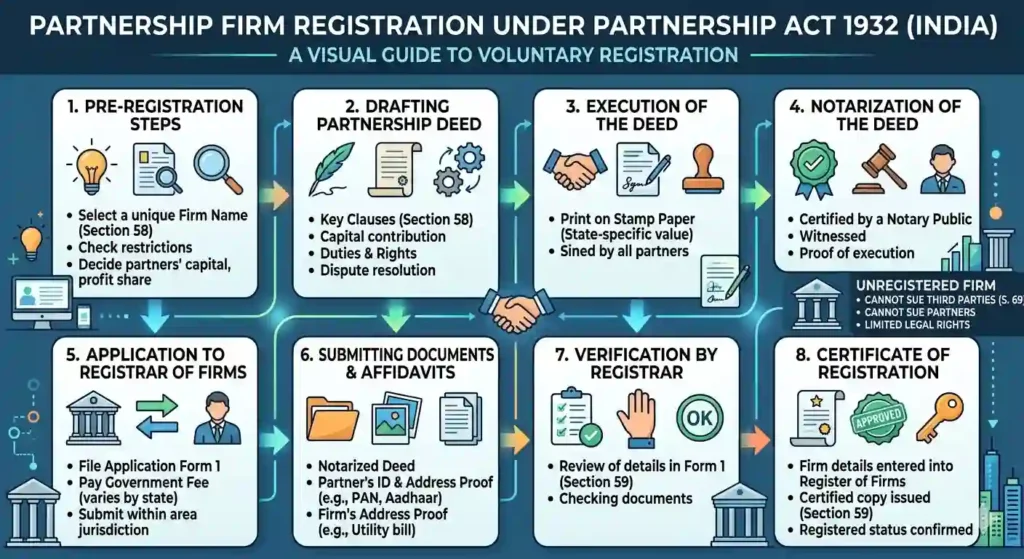
Legal Meaning of Partnership Under Partnership Act 1932
Partnership legally means an agreement between persons conducting business while sharing profits through mutual understanding arrangements. Indian Partnership Act 1932 governs formation, management, dissolution, and liability principles affecting partnership firms nationwide. Furthermore, partnership relationships arise through agreements instead of corporate incorporation or statutory licensing procedures. Every partner generally acts as an agent representing the firm during ordinary business transactions legally. Courts examine partnership deeds, conduct, and financial records while resolving partnership disputes before commercial forums. Additionally, unregistered partnerships face restrictions regarding contractual claim enforcement before competent Civil Courts across India. Key legal keywords include partnership deed registration, partnership dispute lawyer, commercial litigation advocate, and business compliance services. Important authorities include Registrar of Firms, GST Departments, Income Tax Departments, and local municipal authorities. Consequently, proper legal structuring reduces future operational disputes and regulatory complications affecting partnership businesses.
Eligibility Criteria for Partnership Firm Registration in India
Any competent individual capable of entering lawful contracts may become a partner under Indian partnership regulations. Minors generally cannot become partners fully, although benefit sharing arrangements may exist legally. Furthermore, at least two partners must execute partnership agreements before applying for registration before authorities. Foreign nationals and NRIs may also participate subject to FEMA compliance and sector specific regulations. Registrar of Firms offices usually verify partnership deeds, business addresses, and identity documentation carefully during registration. Additionally, businesses involving unlawful objectives cannot obtain valid partnership recognition under Indian commercial laws. Important legal issues include forged signatures, ownership disputes, and unauthorized business representations affecting partnership validity. Relevant forums include Civil Courts, commercial courts, arbitration tribunals, and High Courts across Indian jurisdictions. Key remedies include declaratory suits, injunctions, criminal complaints, and arbitration proceedings against fraudulent conduct. Therefore, proper eligibility verification prevents regulatory violations and future partnership management conflicts.
Essential Partnership Deed Clauses and Drafting Requirements
A professionally drafted partnership deed prevents disputes regarding profit sharing, management authority, and operational responsibilities effectively. Partnership deeds generally mention firm name, business nature, capital contribution, and partner obligations comprehensively. Moreover, clauses regarding retirement, admission, dissolution, and dispute resolution strengthen commercial certainty significantly during operations. Courts frequently examine deed language carefully while deciding commercial litigation and arbitration proceedings involving partnerships. BSA provisions now influence evidentiary evaluation involving digital partnership records and electronic communication evidence substantially. Additionally, poorly drafted deeds often create taxation disputes, operational deadlocks, and financial accountability controversies among partners. Important remedies include deed rectification proceedings, declaratory suits, mediation, and arbitration under contractual clauses. Common keywords include partnership deed drafting, business agreement lawyer, commercial contract advocate, and legal compliance consultancy. Relevant authorities include Registrar of Firms, GST officers, and Income Tax Departments nationwide. Consequently, strategic deed drafting substantially minimizes operational uncertainty and commercial litigation risks.
Registration Procedure Before Registrar of Firms Offices
Partnership registration procedures generally begin through deed preparation and document execution between proposed business partners carefully. Applicants subsequently submit Form One, identity proofs, photographs, and address documentation before concerned authorities. Furthermore, Registrar of Firms offices verify documentation accuracy and business legitimacy before approving registrations officially. State specific online portals now support electronic filing, document uploads, and registration tracking procedures conveniently. Additionally, authorities may reject applications containing incorrect information, incomplete documentation, or misleading declarations during scrutiny. Important forums handling registration disputes include commercial courts, High Courts, and administrative appellate authorities. Key remedies include rectification applications, writ petitions, and administrative representations challenging arbitrary registration rejections legally. Nearby police stations may investigate forged documents or fraudulent identity submissions affecting partnership registrations adversely. Common keywords include online partnership registration, Registrar of Firms filing, and business legal compliance services. Therefore, professional legal assistance significantly improves registration accuracy and procedural efficiency.
Benefits of Registered Partnership Firms Under Indian Commercial Laws
Registered partnership firms receive stronger legal standing during contractual enforcement and debt recovery proceedings nationwide. Courts permit registered firms filing commercial suits against defaulting clients, suppliers, and business associates effectively. Moreover, banks generally prefer registered partnerships while sanctioning loans, overdrafts, and working capital facilities regularly. Registration also improves credibility during vendor negotiations, government licensing, and commercial tender participation procedures significantly. Additionally, registered firms easily obtain GST registration, trade licenses, and taxation related approvals from authorities. Important legal remedies include arbitration claims, commercial recovery proceedings, and injunction applications before competent forums. Relevant authorities include MSME Departments, GST Commissioners, Income Tax Departments, and municipal licensing authorities. Nearby police stations may receive criminal complaints involving fraudulent transactions, cheating, or partnership fund misappropriation allegations. Key legal keywords include registered partnership benefits, commercial dispute lawyer, and MSME legal advisory services. Consequently, registration substantially strengthens operational security and long term commercial growth opportunities.
Difference Between Registered and Unregistered Partnership Firms
Registered partnership firms enjoy enforceable contractual rights before courts unlike unregistered firms facing statutory restrictions legally. Indian Partnership Act provisions prevent unregistered firms pursuing contractual recovery claims before Civil Courts generally. Furthermore, registration improves evidentiary credibility during commercial litigation and arbitration proceedings involving partnership businesses nationwide. Unregistered partnerships may continue operations legally, although litigation rights remain substantially restricted under applicable statutes. Additionally, financial institutions often hesitate while processing loans for unregistered business structures lacking formal recognition. Important legal forums include commercial courts, District Courts, arbitration tribunals, and High Courts across Indian jurisdictions. Relevant remedies include partnership registration, contractual arbitration, debt recovery proceedings, and declaratory relief applications. Nearby police stations frequently investigate fraud complaints involving fake partnership entities and unauthorized commercial representations. Key legal keywords include unregistered partnership risks, commercial recovery advocate, and business dispute legal services. Therefore, registration significantly improves legal enforceability, financial access, and commercial credibility.
GST Registration and Tax Compliance for Partnership Firms
Partnership firms conducting taxable supplies generally require GST registration under applicable turnover threshold provisions nationwide. GST compliance includes invoice generation, return filing, tax payment, and input credit reconciliation procedures regularly. Furthermore, registered partnerships must maintain transparent accounting records supporting taxation and commercial compliance obligations carefully. Income Tax Departments also require PAN applications and annual return submissions from partnership entities consistently. Additionally, GST authorities may impose penalties for delayed filings, tax evasion, or fraudulent invoice generation activities. Important remedies include appellate proceedings, tax rectification applications, and settlement representations before concerned departments legally. Relevant authorities include GST Commissionerates, Income Tax Appellate Tribunals, and commercial tax enforcement agencies. Nearby police stations and economic offense wings sometimes investigate large scale GST fraud allegations involving partnerships. Key legal keywords include GST compliance lawyer, partnership taxation advocate, and commercial tax litigation support. Consequently, timely compliance protects partnerships from penalties, investigations, and operational disruptions effectively.
Role of CPC, BNS, BNSS, and BSA During Partnership Disputes
Commercial disputes involving partnership firms frequently involve civil and criminal remedies under modern Indian procedural laws. CPC provisions regulate commercial suit filings, injunction applications, execution proceedings, and documentary evidence presentation procedures. Furthermore, BNS provisions apply during cheating, criminal breach, forgery, or financial misappropriation allegations involving business partners. BNSS procedures now govern investigation, arrest, bail, and criminal trial processes affecting partnership related offenses nationwide. Additionally, BSA provisions regulate admissibility standards involving electronic records, partnership emails, and financial communication evidence. Important forums include commercial courts, Magistrate Courts, economic offense wings, and arbitration tribunals across India. Nearby police stations frequently register complaints involving forged signatures, unauthorized withdrawals, and partnership fund diversion allegations. Key remedies include criminal complaints, recovery suits, injunction applications, and arbitration proceedings before competent authorities. Therefore, integrated legal strategies protect partnership businesses from civil liabilities and criminal exposure simultaneously.
Banking Compliance and Financial Documentation Requirements
Banks generally require partnership registration documents before opening current accounts and sanctioning commercial facilities officially. Financial institutions usually examine partnership deeds, PAN cards, GST certificates, and authorization letters carefully during verification. Moreover, transparent bookkeeping supports taxation compliance and commercial dispute defense during investigations effectively across jurisdictions. Registered partnerships also access overdraft facilities, business loans, and digital banking services more conveniently nationwide. Additionally, suspicious transactions may trigger regulatory scrutiny from banking authorities and financial intelligence agencies. Important legal remedies include banking ombudsman complaints, recovery proceedings, and financial fraud litigation before competent forums. Relevant authorities include Reserve Bank related mechanisms, commercial tribunals, and Debt Recovery Tribunals across India. Nearby police stations often investigate cyber fraud, forged cheques, and unauthorized banking transaction complaints involving partnerships. Key legal keywords include partnership banking compliance, commercial finance lawyer, and financial dispute resolution services. Consequently, organized financial documentation substantially strengthens business credibility and operational stability.
Dispute Resolution Mechanisms for Partnership Business Conflicts
Partnership disputes frequently arise regarding profit sharing, management authority, capital contributions, and business expansion decisions nationwide. Courts generally encourage mediation and arbitration because commercial relationships benefit from faster dispute resolution mechanisms significantly. Furthermore, partnership deeds often contain arbitration clauses governing jurisdiction, procedure, and appointment of arbitrators carefully. Commercial Courts handle substantial recovery claims, injunction requests, and dissolution proceedings involving partnership businesses efficiently. Additionally, High Courts exercise supervisory jurisdiction regarding arbitration challenges and procedural irregularity disputes legally. Important remedies include mediation settlements, arbitral awards, commercial recovery suits, and partnership dissolution proceedings. Nearby police stations may investigate criminal intimidation, document forgery, or asset misappropriation allegations involving partners. Relevant legal keywords include arbitration lawyer, partnership dissolution advocate, and commercial litigation legal support services. Therefore, strategic dispute resolution mechanisms minimize financial losses and operational disruptions effectively.
Partnership Firm Dissolution and Retirement Procedures
Partnership dissolution procedures generally depend upon deed clauses, mutual consent, insolvency, or statutory business impossibility situations. Indian Partnership Act provisions regulate asset distribution, liability settlement, and notice requirements affecting dissolution proceedings nationwide. Furthermore, retiring partners should execute retirement deeds clarifying liabilities, continuing obligations, and financial settlements comprehensively. Courts frequently examine account books and transactional records during dissolution related commercial litigation proceedings carefully. Additionally, public notices regarding retirement or dissolution protect outgoing partners from future unauthorized liabilities legally. Important remedies include dissolution suits, accounting proceedings, arbitration, and injunction applications before competent courts. Relevant authorities include Registrar of Firms, GST Departments, and Income Tax authorities requiring compliance updates. Nearby police stations sometimes investigate asset diversion, accounting manipulation, and fraudulent withdrawals during partnership dissolution disputes. Key legal keywords include partnership dissolution lawyer, retirement deed drafting, and commercial settlement legal services. Consequently, legally structured dissolution procedures prevent future liabilities and commercial conflicts effectively.
Liability of Partners and Third Party Commercial Obligations
Every partner generally remains jointly liable for partnership obligations arising during ordinary business operations legally nationwide. Third parties may recover dues from partnership assets and individual partner resources under applicable commercial principles. Furthermore, unauthorized acts beyond partnership authority sometimes create internal disputes regarding liability allocation among partners. Courts carefully examine partnership deeds and transactional evidence during liability related commercial litigation proceedings. Additionally, negligent conduct by one partner may expose remaining partners toward civil and financial liabilities significantly. Important remedies include indemnity claims, contribution proceedings, commercial arbitration, and recovery suits before competent forums. Relevant authorities include commercial courts, arbitration centers, and regulatory departments supervising sector specific business operations. Nearby police stations may investigate fraud, embezzlement, or criminal breach allegations involving partnership liabilities and financial misconduct. Key legal keywords include partner liability lawyer, commercial debt recovery advocate, and business dispute legal representation. Therefore, clear operational authority clauses substantially reduce financial exposure and commercial uncertainty.
Digital Filing Systems and Online Partnership Registration Portals
Several Indian states now provide electronic partnership registration systems improving compliance accessibility and procedural transparency significantly nationwide. Applicants may upload partnership deeds, identity documents, and address proofs through designated government portals conveniently. Furthermore, digital systems reduce paperwork delays and improve status tracking during registration approval procedures substantially. Online filing also supports electronic payment facilities and document verification mechanisms for business applicants efficiently. Additionally, incorrect uploads or mismatched information frequently trigger application objections and procedural complications unnecessarily. Important remedies include rectification filings, administrative appeals, and technical grievance representations before concerned authorities legally. Relevant departments include State Commercial Tax Offices, Registrar of Firms portals, and digital governance departments. Nearby cybercrime police stations may investigate hacking, data misuse, or fraudulent portal access affecting applicants adversely. Key legal keywords include online firm registration, digital business compliance, and electronic filing legal consultancy services. Consequently, accurate digital submissions substantially improve approval timelines and operational convenience.
MSME Registration and Government Benefits for Partnership Firms
Partnership firms may obtain MSME registration for accessing government incentives, subsidies, and commercial support mechanisms nationwide. MSME recognition often improves loan accessibility, delayed payment remedies, and participation opportunities within government procurement systems. Furthermore, registered MSMEs receive protection under delayed payment recovery provisions before Micro and Small Enterprise tribunals. Banks frequently prefer MSME registered partnerships while evaluating creditworthiness and financial assistance applications professionally. Additionally, government departments provide technology support, training programs, and export promotion incentives benefiting partnership businesses significantly. Important remedies include MSME recovery proceedings, arbitration, and commercial litigation against payment defaulting entities legally. Relevant authorities include MSME Departments, Facilitation Councils, and commercial finance institutions operating across Indian jurisdictions. Nearby police stations sometimes investigate subsidy fraud or forged MSME documentation involving partnership entities adversely. Key legal keywords include MSME registration lawyer, delayed payment recovery advocate, and business incentive legal support. Therefore, MSME registration substantially strengthens financial growth opportunities and commercial protection mechanisms.
Intellectual Property Protection for Partnership Businesses
Partnership firms frequently require trademark, copyright, and domain protection safeguarding commercial identity and market reputation effectively. Trademark registration protects business names, logos, and branding materials from unauthorized commercial exploitation nationwide legally. Furthermore, copyright protection secures original content, marketing materials, and digital business resources developed professionally. Courts regularly issue injunctions against counterfeit activities, passing off disputes, and trademark infringement affecting partnerships adversely. Additionally, partnerships operating online should secure domain ownership and digital branding rights strategically for long term protection. Important remedies include trademark opposition proceedings, infringement suits, and cyber complaint mechanisms before competent authorities. Relevant forums include Intellectual Property Appellate mechanisms, commercial courts, and cybercrime investigation authorities across India. Nearby police stations may investigate counterfeit goods, cyber fraud, and intellectual property theft allegations involving businesses. Key legal keywords include trademark registration lawyer, intellectual property advocate, and business brand protection services. Consequently, strategic intellectual property protection significantly enhances commercial recognition and legal security.
Employment Compliance and Labor Law Obligations for Partnerships
Partnership firms employing workers must comply with labor laws, wage regulations, and workplace safety requirements consistently nationwide. Employment agreements should clearly mention duties, compensation structures, confidentiality obligations, and termination conditions professionally. Furthermore, labor authorities regularly inspect establishments regarding statutory benefits, provident fund compliance, and workplace standards carefully. Registered partnerships also require Shops and Establishments registration depending upon operational jurisdictions and business activities. Additionally, employee misconduct, wrongful termination, and wage disputes often trigger labor litigation and regulatory scrutiny significantly. Important remedies include labor conciliation proceedings, employment arbitration, and Industrial Tribunal litigation before competent authorities. Relevant departments include Labor Commissioners, Employees Provident Fund authorities, and ESI compliance offices nationwide. Nearby police stations sometimes investigate workplace violence, harassment, and employment fraud complaints involving business establishments. Key legal keywords include labor law compliance, employment dispute lawyer, and workplace legal advisory services. Therefore, proper employment compliance substantially reduces litigation exposure and operational liabilities effectively.
Commercial Litigation and Recovery Proceedings Against Defaulting Parties
Partnership firms frequently initiate recovery proceedings against clients, suppliers, and debtors defaulting contractual payment obligations commercially. Commercial Courts generally handle substantial recovery suits involving invoices, agreements, and financial documentation evidence efficiently nationwide. Furthermore, CPC provisions regulate summary suits, attachment proceedings, and execution remedies supporting debt recovery litigation strategically. Arbitration clauses within partnership contracts often provide faster resolution mechanisms compared with traditional litigation processes. Additionally, electronic invoices and digital communication now receive evidentiary recognition under BSA provisions substantially. Important remedies include summary suits, arbitration claims, insolvency proceedings, and interim injunction applications before competent forums. Relevant authorities include Commercial Courts, arbitration centers, and Debt Recovery Tribunals across Indian jurisdictions. Nearby police stations may investigate cheating, criminal intimidation, or fraudulent payment diversion allegations involving commercial transactions. Key legal keywords include commercial recovery lawyer, debt recovery advocate, and business litigation legal services. Consequently, strategic litigation planning significantly improves financial recovery and contractual enforcement outcomes.
Criminal Complaints and Fraud Investigations Involving Partnerships
Partnership disputes occasionally involve criminal conduct including forgery, cheating, financial diversion, and document manipulation allegations nationwide. BNS provisions apply during investigations involving dishonest inducement, criminal breach, and falsified commercial documentation activities. Furthermore, BNSS procedures govern complaint filing, investigation protocols, evidence collection, and criminal trial proceedings comprehensively. Economic Offense Wings frequently investigate large scale commercial fraud involving partnership businesses and financial misconduct allegations. Additionally, cybercrime authorities handle online fraud, unauthorized transactions, and digital impersonation affecting partnership operations adversely. Important remedies include criminal complaints, anticipatory bail applications, recovery proceedings, and forensic audit requests before authorities. Relevant forums include Magistrate Courts, Sessions Courts, and High Courts exercising criminal appellate jurisdiction nationally. Nearby police stations regularly register FIRs involving forged signatures, financial embezzlement, and unauthorized partnership representations. Key legal keywords include partnership fraud lawyer, criminal breach advocate, and business crime legal defense services. Therefore, immediate legal intervention significantly protects business assets and evidentiary integrity during investigations.
Legal Support Services Offered by Empower Legal – Corporate Law Firm
Empower Legal – Corporate Law Firm provides comprehensive assistance regarding partnership registration and commercial compliance matters nationwide. The firm regularly advises startups, traders, consultants, and MSMEs regarding partnership structuring and operational documentation professionally. Furthermore, advocates handle deed drafting, registration filings, GST compliance, and dispute resolution proceedings efficiently before authorities. Clients also receive support regarding commercial recovery, arbitration, intellectual property, and criminal complaint procedures strategically. Additionally, the firm represents partnerships before commercial courts, tribunals, arbitration centers, and High Courts effectively. Important legal remedies include injunction applications, dissolution proceedings, arbitration claims, and contractual recovery litigation nationwide. Relevant forums include Registrar of Firms offices, GST departments, Commercial Courts, and Debt Recovery Tribunals. Nearby police stations and cybercrime cells also receive legal coordination support during business fraud investigations professionally. Key legal keywords include partnership registration lawyer, corporate compliance advocate, and commercial litigation legal consultancy services. Consequently, professional legal guidance substantially improves business compliance and commercial protection strategies.
Future Trends in Partnership Business Laws and Commercial Compliance
Indian commercial regulations increasingly emphasize digital compliance, financial transparency, and technology driven business governance mechanisms nationwide. Partnership firms now adopt electronic bookkeeping, online filing systems, and digital contract management solutions strategically. Furthermore, BSA recognition of electronic evidence substantially affects commercial litigation and partnership dispute resolution procedures. Government departments also encourage integrated compliance through centralized registration portals and electronic verification frameworks efficiently. Additionally, cyber compliance and data protection obligations increasingly influence partnership operations involving online commercial activities significantly. Important remedies include cyber complaint mechanisms, digital evidence preservation applications, and regulatory compliance representations legally. Relevant authorities include cybercrime departments, GST authorities, commercial courts, and digital governance regulatory bodies nationwide. Nearby police stations frequently coordinate cyber investigations involving fraudulent transactions and online commercial misconduct allegations. Key legal keywords include digital compliance lawyer, commercial cyber regulation advocate, and business governance legal advisory services. Therefore, proactive compliance planning substantially strengthens commercial sustainability and regulatory protection for partnerships.
FAQs About Partnership Firm Registration Under Partnership Act 1932
- Is partnership registration compulsory under Indian law?
Registration remains optional legally. However, unregistered firms face contractual recovery restrictions before Civil Courts. - Which authority registers partnership firms in India?
Registrar of Firms offices under respective State Governments generally process partnership registration applications. - Can NRIs become partners within Indian firms?
Yes. NRIs may join partnerships subject to FEMA regulations and sector specific compliance requirements. - What documents support partnership registration applications?
Applicants generally submit partnership deeds, identity proofs, address documents, photographs, and business details. - Which court handles partnership business disputes?
Commercial Courts, Civil Courts, arbitration tribunals, and High Courts commonly handle partnership disputes. - Can police investigate partnership fraud allegations?
Yes. Nearby police stations and Economic Offense Wings investigate cheating, forgery, and financial misappropriation complaints.
Read More
- Limited Liability Partnership (LLP) Registration: Complete Process
- Public Limited Company Incorporation: Requirements and Process
- One Person Company (OPC) Formation: Solo Entrepreneur’s Guide
- Private Limited Company Registration in India: Complete Guide 2026
- RERA Compliance & Valuation Dispute Solutions by Property Lawyers
- National Government Services Portal – Partnership Firm Registration Services